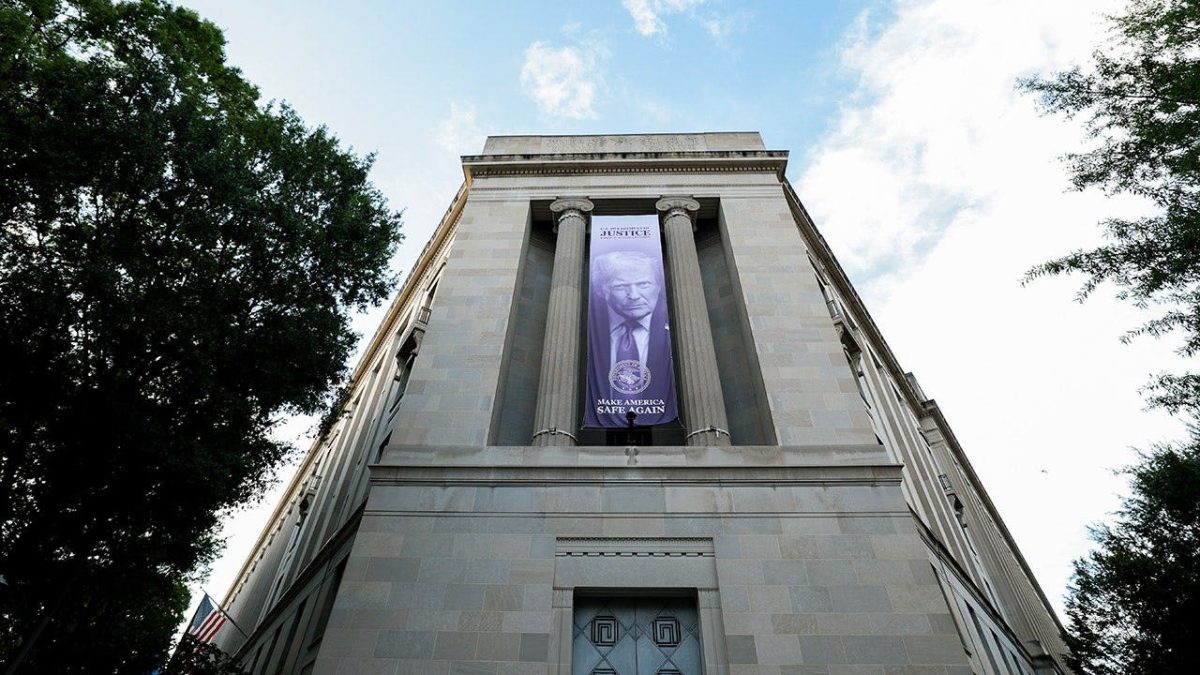
A federal judge rejected the Justice Department’s push to dismiss a lawsuit over the Trump administration’s $1.776 billion Anti-Weaponization Fund — telling DOJ lawyers Friday the core issues remain “alive and kicking” despite Attorney General Todd Blanche’s sworn testimony that the fund is dead.
U.S. District Judge Leonie Brinkema made clear she’s not buying the DOJ’s claim that rescinding the fund in August ended the matter. The decision marks the latest development in a legal battle that has raised fundamental questions about executive power, the appropriations process, and the separation of powers between Congress and the White House.
“The issues that underlie this case are still alive and kicking in my view.”
Brinkema pointed to the DOJ’s ordinary Judgment Fund — a permanent Treasury account that pays court settlements against the federal government — as a potential “functional equivalent” of the Anti-Weaponization Fund. She called it “a less transparent structure” and noted that some defendants convicted of FACE Act violations have already received large payouts from the Judgment Fund since the original fund was blocked.
The Judgment Fund, established by Congress and codified in federal law, operates differently from specially designated funds in that it functions as a permanent, indefinite appropriation requiring less oversight and public disclosure. This structural difference is at the heart of Brinkema’s concern about accountability and transparency in how taxpayer dollars are distributed to settle claims against the government.
The judge was referring to Paul Vaughn, a Tennessee pro-life activist convicted in January 2024 for blockading an abortion clinic in Mount Juliet in March 2021. Vaughn ultimately received a Trump pardon and a seven-figure taxpayer-funded settlement from the DOJ’s Judgment Fund.
The Vaughn case exemplifies the practical effect of the administration’s approach even after the formal rescission of the Anti-Weaponization Fund. His settlement, paid through existing Treasury mechanisms, demonstrates how the substance of the original fund’s purpose could continue through alternative channels — precisely the pattern that appears to concern the federal bench.
Brinkema’s skepticism extends beyond the technical existence of the fund. She framed the underlying concern as “the concept of taxpayer money being used to promote particular political views” — referencing both pro-life activists convicted under the FACE Act and those who attempted an “insurrection” on Jan. 6 “to overthrow the legitimate election.”
The constitutional dimensions of this dispute center on whether the executive branch can unilaterally create and fund compensation programs that advance specific ideological objectives without explicit congressional authorization. This implicates the Appropriations Clause of the Constitution, which vests Congress with the power of the purse and restricts executive spending to amounts and purposes authorized by law.
DOJ lawyer Andrew Block pressed the court on what remedy the plaintiff could possibly want given “the fund is dead.” Brinkema countered that although the case hasn’t reached the remedy stage, “I think there are remedies.”
The exchange highlighted a fundamental disagreement about mootness doctrine — the legal principle that courts cannot decide cases where there is no longer a live controversy. The DOJ’s position relies on the formal rescission rendering the case moot, while Brinkema’s response suggests the controversy remains active given the continued payments through alternative mechanisms.
She floated requiring a “neutral” person to oversee any future settlement fund — “not someone from the DOJ, which I see unfortunately as coerced” in this matter.
“A proper, unbiased look. … There’s been too much talk from members of the administration, which undercut [DOJ’s] position. They contradict themselves all the time.”
Her comments reflect broader concerns about institutional independence within the Justice Department and whether traditional internal controls remain sufficient to ensure impartial administration of justice. The suggestion of external oversight represents a potentially significant judicial intervention into executive branch operations, raising its own separation-of-powers questions.
Brinkema closed the hearing by telling both sides she intends to craft a new discovery order in the coming days — signaling the case is far from over despite the Trump DOJ’s insistence the fund no longer exists.
The discovery phase will likely focus on internal communications and decision-making processes regarding both the original fund and subsequent payments through the Judgment Fund. This investigative process could reveal whether there was coordination to achieve the same policy goals through less visible means.
The original Anti-Weaponization Fund was announced by the Trump administration to compensate Americans the DOJ alleges were targeted by politically motivated prosecutions under the Biden administration. Brinkema, a Clinton appointee, indefinitely blocked the fund earlier this year. The ongoing litigation represents a significant test of judicial authority to scrutinize executive branch spending practices and enforce constitutional limits on presidential power over the federal purse.