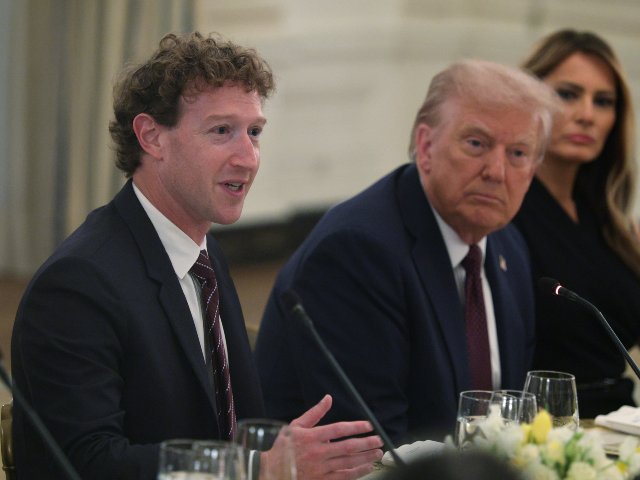
Mark Zuckerberg just picked a side in the AI industry’s biggest fight — and he’s standing with President Donald Trump.
The Meta CEO weighed in Tuesday on the heated debate over whether to slow AI development, aligning himself with Trump and Nvidia CEO Jensen Huang against a coalition of tech leaders — including Anthropic’s Dario Amodei, OpenAI’s Sam Altman, and Elon Musk — who want to pump the brakes.
The debate centers on a fundamental question that has divided Silicon Valley: whether the breakneck pace of AI advancement has outstripped the industry’s ability to ensure these powerful systems remain safe and controllable. Those calling for a slowdown argue that AI capabilities are advancing faster than researchers can solve critical alignment problems — ensuring AI systems do what humans actually want them to do. The opposing camp contends that slowing progress would hand competitive advantage to nations and companies less concerned with safety, ultimately making everyone less secure.
“There is a lot of debate about slowing progress on capabilities until alignment catches up. My view is that trust and alignment are quickly becoming the most important capabilities that will differentiate agents and models.”
Zuckerberg’s post on X and other platforms landed in the middle of a week-long industry blowout. Amodei published an essay over the weekend calling for the industry to “slow the pace at which we improve the capabilities of AI models.” Both Altman and Musk endorsed the idea. Trump harshly rejected it.
The swift escalation of this debate reflects deeper anxieties within the tech industry about the trajectory of artificial intelligence development. AI models have grown exponentially more capable over the past two years, raising questions about whether existing safety measures and testing protocols are adequate for systems that may soon match or exceed human performance across a wide range of tasks.
Zuckerberg warned that any company focused on slowdown “will fall behind.”
His intervention carries particular weight given Meta’s position as one of the world’s largest AI developers. The company has invested billions in AI infrastructure and research, positioning artificial intelligence as central to its future across Facebook, Instagram, WhatsApp, and its metaverse ambitions. Zuckerberg’s stance suggests Meta plans to maintain aggressive development timelines rather than adopt more cautious approaches.
The Meta boss argued that market forces — not government mandates — will keep AI developers accountable. Labs face “significant liability if their models cause harm,” he said, creating a natural incentive to catch problems early. He pointed to Meta’s decision to delay shipping its Muse AI technologies for “safety and security” reasons as proof the system already works.
“We just did it as part of our day-to-day work because it was clearly the right thing for people and for us,” Zuckerberg wrote.
This free-market argument represents a sharp departure from calls for government intervention that have gained traction in Washington and Brussels. Policymakers on both sides of the Atlantic have been considering AI-specific legislation that would impose safety testing requirements, mandate transparency measures, and create new regulatory frameworks for the technology. Zuckerberg’s position essentially argues that such intervention would be counterproductive.
Nvidia’s Huang backed Trump publicly during a live phone call with the All-In Podcast hosts last week. Trump needled Huang about the setup: “The great thing about life is Jensen can develop the most complex computer chip in the world … but he can’t figure out how to put you on speaker.”
The call landed in the middle of the AI slowdown debate. Huang told the hosts he doesn’t agree with Amodei’s approach — and Trump used the moment to back him up.
Huang’s perspective matters because Nvidia supplies the specialized chips that power nearly all advanced AI development. The company’s graphics processing units have become essential infrastructure for training large AI models, giving Huang unique visibility into the industry’s technical trajectory and competitive dynamics.
Huang doubled down in a separate interview on CNBC’s Mad Money, calling many proposed AI-specific laws and regulations “just completely unnecessary.” Existing rules already cover the ground, he said: “We have plenty of laws. We have plenty of regulations that govern the reliability and the functionality of products.”
This argument echoes a broader concern among tech executives that premature regulation could lock in current approaches and stifle innovation. They contend that product liability laws, consumer protection statutes, and existing regulatory frameworks provide sufficient oversight without creating new bureaucratic layers that could slow development or favor established players over startups.
The battle lines are now clear. On one side: Trump, Zuckerberg, and Huang arguing that AI development should race forward with existing legal frameworks keeping bad actors in check. On the other: Amodei, Altman, and Musk pushing for industry-wide slowdowns and tighter controls.
The split reveals a fascinating political realignment, with Musk — typically aligned with Trump on many issues — breaking with the president on this crucial technology question. It also highlights the high stakes involved: the outcome of this debate will likely shape which countries and companies dominate what many consider the most important technology of the century.
Patriots watching this fight know which side wins. Trump’s position is simple: “Whoever wins AI, wins.”
Last month I wrote about how we can build a positive and safe future for everyone: https://t.co/1KtONlqBs5
Every lab has the responsibility and incentive to move at the pace required to train its models safely, and the ability to take its own actions to ensure that happens.
The…
— Mark Zuckerberg (@finkd) September 15, 2026