Iran’s top security official issued a stark ultimatum to President Donald Trump on Monday, warning that the strategic balance around the region’s critical waterways has shifted decisively against Washington — and ruling out any negotiations until Tehran’s sweeping demands are met.
“Don’t get distracted by the U.S. president’s mixed signals — from ‘no negotiations’ to ‘we’re ready to talk,'” Mohsen Rezaei, secretary of Iran’s powerful Supreme National Security Council, wrote on X.
“THE STAKES AROUND OIL AND THE STRAITS HAVE CHANGED. DAMAGE CONTROL WON’T STOP WHAT’S COMING.”
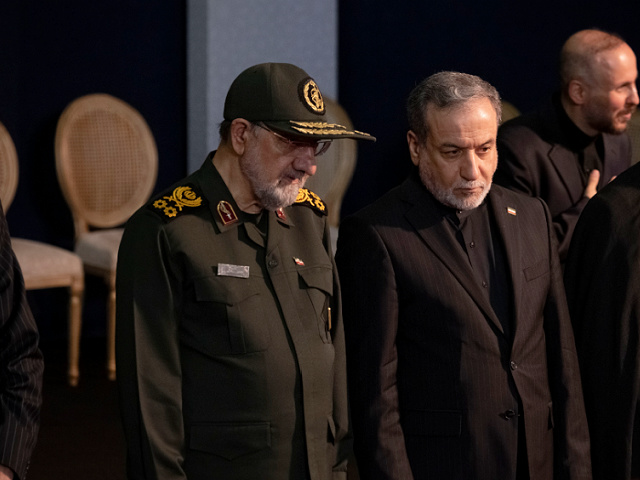
Rezaei’s threat carries weight: he was recently elevated to secretary of the powerful security body at the direction of Supreme Leader Mojtaba Khamenei. He also serves as Khamenei’s personal representative on the council, placing him at the center of Iran’s national security decisions.
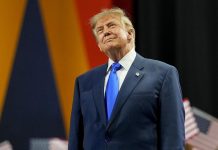
The warning came just hours after Trump opened the door to possible talks with Tehran, saying Iran wants an agreement “quickly and badly” while emphasizing he hasn’t decided whether Washington will engage.
“I will determine whether or not the U.S.A. will choose to engage — The concept of which we are open to,” Trump wrote on Truth Social.
Rezaei’s reference to “the straits” comes as Iran seeks leverage over the Strait of Hormuz while Iran-backed Houthis rapidly expand control around the Bab el-Mandeb Strait — two of the world’s most critical maritime chokepoints for global oil shipments.
Just a week earlier, Rezaei threatened to establish a new Iranian maritime exclusion zone across the Persian Gulf in retaliation for Washington’s economic sanctions campaign.
“Economic warfare will be met by a maritime exclusion zone across the Persian Gulf to the blockade perimeter,” he declared, adding that Iran’s “operational posture toward U.S. warships and bases has been fundamentally recalibrated.”
Washington sharply disputes Tehran’s portrayal. A senior U.S. official declared last week that the strait was “fully open and under U.S. Navy control” following a months-long American operation to clear Iranian naval assets from internationally recognized shipping lanes.
The competing accounts resurfaced Monday after the Islamic Revolutionary Guard Corps claimed the disabled Panama-flagged tanker El Gaia had struck an Iranian naval asset. U.S. Central Command flatly rejected the claim, saying the vessel had been disabled by an Iranian projectile last month before Iran struck it again with an unmanned aerial vehicle off Oman over the weekend.
The contest over shipping routes is no longer confined to Hormuz. The IRGC last week issued sweeping conditions for ending the regional conflict that included the release of $24 billion in frozen Iranian assets, an end to U.S. threats against Tehran’s nuclear and ballistic programs, an Israeli withdrawal from Lebanon — where Iran has long armed Hezbollah — and an end to the blockade of Yemen, where Tehran backs the Houthi militant group.
The Yemen demand comes as the Houthis made major territorial gains along the country’s Red Sea coast and around Bab el-Mandeb, including the seizure of strategic Perim Island and, more recently, Greater and Lesser Hanish.
The group escalated attacks on Saudi Arabia again Monday, launching projectiles and unmanned aerial vehicles at Khamis Mushait, Abha and Taif, according to the Saudi-led coalition in Yemen.
Coalition spokesman Maj. Gen. Turki al-Malki said 13 civilians suffered minor-to-moderate injuries and seven homes and two vehicles were damaged.
“THE CONTINUATION OF THESE DELIBERATE AND REPEATED ATTACKS PROVES THE HOUTHI MILITIA’S APPROACH AND EXTREMIST IDEOLOGY OF ESCALATION AND TARGETING CIVILIAN OBJECTS.”
The escalation prompted Saudi Crown Prince Mohammed bin Salman to seek outside help. He met U.S. Central Command chief Adm. Brad Cooper in Jeddah on Monday after previously asking Trump for American assistance against the Houthis.
Trump declined Riyadh’s request for direct U.S. strikes, though Washington offered intelligence-sharing and targeting assistance.
Vice President JD Vance, asked Monday about the Houthi seizure of Perim Island, said Washington is “concerned” and keeping close tabs while confirming direct U.S. contacts with the group.
“We’ve been in constant contact with the Emiratis, the Saudis, and others who are affected in the region,” Vance said. “We’ve also been engaged in direct conversations with the Houthis themselves.”
Compounding the pressure, Saudi Arabia’s principal route for bypassing Hormuz has itself been knocked offline. The Kingdom’s roughly 745-mile East-West Pipeline, capable of moving as much as seven million barrels of oil per day from the Gulf side of Saudi Arabia to the Red Sea port of Yanbu, was shut following an unmanned aerial strike launched from Iraqi territory.
U.S. Energy Secretary Chris Wright said Monday that he expects the critical bypass route to return to service soon.
“I think you’ll see that pipeline running back soon,” Wright told Bloomberg Television, adding that Saudi officials have been assessing the damage and that greater clarity should emerge “very soon.”
Regional officials have estimated repairs could take three to five weeks, although partial operations could resume sooner.
Efforts to reach a diplomatic accommodation over Hormuz have stalled amid the widening confrontation. A meeting between Iran and Gulf states scheduled for Monday in Oman was postponed, with Tehran saying Saudi Arabia requested the delay and Oman describing the move as being “in the interest of consensus.”
Even as Rezaei ruled out talks, Iranian President Masoud Pezeshkian struck a more conciliatory public tone, saying Tehran remains prepared for dialogue — albeit on conditions Washington has repeatedly rejected.
“We are ready for dialogue,” Pezeshkian told India Today, while insisting the United States “should lift its sanctions, abandon unilateralism, not speak to us through force, and open the way so that we can live like the rest of the world.”
Pezeshkian also questioned why negotiations should begin again from scratch rather than build on the earlier framework reached through regional mediation.
The earlier U.S.-Iran framework established a 60-day negotiating window but began unraveling after Iranian forces attacked commercial vessels in Hormuz. The New York Times reported Sunday that Iranian hardliners carried out the attacks in a clandestine effort to sabotage the agreement, blindsiding Pezeshkian and even senior figures within the IRGC.
Trump, meanwhile, has coupled his renewed openness to a deal with repeated warnings that any agreement must be on Washington’s terms.
Speaking in Ireland on Sunday, Trump said Iran was “calling constantly” for an agreement but insisted, “They’ve got to make the right deal. I’m not going to make a deal that’s no good.”
He also predicted the conflict could end around the November midterm elections — “maybe before” — a timetable he shortened further Monday while projecting confidence in the U.S. military position and the flow of energy through Hormuz.
Trump said American defense plants were operating “24/7,” with Patriots, THAAD systems, Tomahawks, and other capabilities being delivered to U.S. forces, while declaring in a separate Truth Social post that “Oil is flowing through the Hormuz Strait.”
“OIL WILL DROP LIKE A ROCK AS SOON AS THE CONFLICT WITH IRAN IS OVER — AND THAT WILL NOT BE LONG.”
The two sides are approaching the possibility of renewed talks from sharply different assessments of their leverage: Trump says Iran is pressing for a deal while American weapons pour into the region and oil again moves through Hormuz, while Rezaei argues that developments surrounding the region’s critical waterways have changed the equation.
“The stakes around oil and the straits have changed,” Rezaei declared. “Damage control won’t stop what’s coming.”
Don’t get distracted by the U.S. president’s mixed signals—from “no negotiations” to “we’re ready to talk.” The stakes around oil and the straits have changed. Damage control won’t stop what’s coming.
No talks until Iran’s conditions are met. Period!— محسن رضایی (@ir_rezaee) September 14, 2026
— Rapid Response 47 (@RapidResponse47) September 14, 2026