
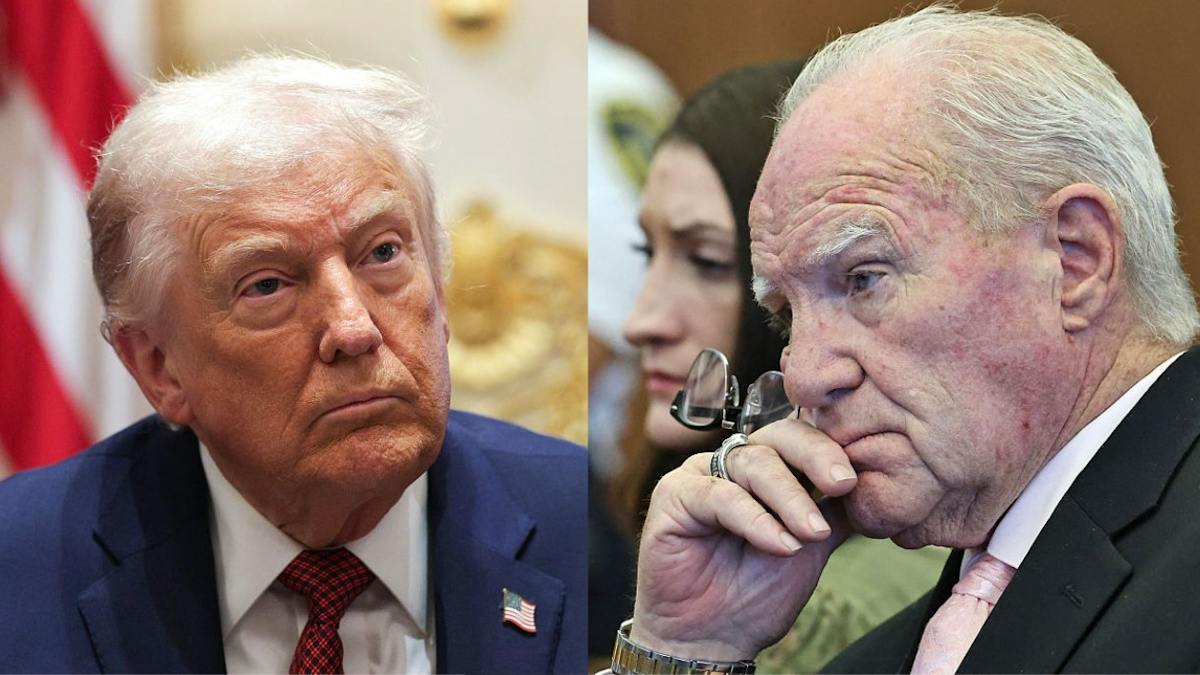
President Donald Trump on Sunday firmly rejected a defense attorney’s extraordinary request to intervene in the Lindsay Clancy case, a Massachusetts state prosecution where the defendant has admitted to causing the loss of her three young children’s lives.
The case has drawn national attention not only for its tragic circumstances but also for the unusual legal strategy employed by the defense team in the wake of a recent mistrial. Defense attorneys have argued that Clancy was suffering from severe postpartum psychosis at the time of the incident, a mental health condition that can include delusions, hallucinations, and impaired judgment. The insanity defense, while recognized in Massachusetts law, faces significant hurdles in criminal prosecutions and requires the defense to prove that the defendant could not distinguish right from wrong due to mental illness.
Trump’s response came after defense lawyer Kevin Reddington called on the president to pardon Clancy or pressure the state prosecutor following a mistrial earlier this month.
“It’s a very sad situation. … There is no winner there — there’s no win no matter what you do; three children are dead. It’s actually a state situation, not a federal.”
The president acknowledged the tragedy while making clear he has no jurisdiction over state charges.
Trump’s statement reflects a fundamental principle of American federalism: the separation between state and federal criminal justice systems. Presidential pardon power, as outlined in Article II of the Constitution, extends only to federal offenses. State governors hold the equivalent authority for state-level crimes, meaning Massachusetts Governor would be the only executive with potential clemency power in this case. This constitutional limitation has been well-established since the founding of the republic and reinforced through centuries of legal precedent.
When pressed by reporters about whether he would pressure the state prosecutor as Reddington requested, Trump declined.
“I hope they can work it out, that’s something they have to work out,” Trump said. “There is no win there.”
The president’s measured response stands in contrast to the defense attorney’s public appeals, which legal observers have characterized as unconventional courtroom strategy. Public appeals to federal officials in state prosecutions are rare, particularly when the legal impossibility of such intervention is clear from the outset.
Reddington’s appeal came after a jury deliberated for days but ultimately hung when a lone juror refused to agree that Clancy was not guilty by reason of insanity, according to fellow jurors. The mistrial left prosecutors with the option to retry the case.
Mistrials due to hung juries are not uncommon in cases involving insanity defenses, which often present juries with difficult questions about mental state, criminal culpability, and justice. The insanity defense succeeds in only a small fraction of cases where it is raised, and even when juries are sympathetic to mental health arguments, they often struggle with the legal standard required for acquittal. The near-unanimous jury in this case suggests that Clancy’s defense team came remarkably close to a complete acquittal, with only one juror standing between the defendant and a not guilty verdict.
Legal experts noted the defense attorney’s strategy appeared impractical from the start. Clancy faces state charges, not federal ones — meaning a presidential pardon was never legally possible.
When NBC pressed Reddington on the discrepancy, he shifted to suggesting Trump could apply political pressure through the Department of Justice.
“Trump would be able to reach out to one of his Department of Justice people, … maybe talk to [District Attorney] Tim Cruz, and maybe bring some pressure,” Reddington said.
The suggestion that federal officials might pressure state prosecutors raises significant concerns about prosecutorial independence and the integrity of the justice system. State prosecutors operate independently from federal oversight in their charging decisions, and federal interference in state criminal matters would represent a dramatic departure from established norms of judicial federalism. Such intervention could also raise questions about equal treatment under law and whether political connections should influence prosecutorial discretion.
The NBC interviewer challenged the ethics of that request: “But why do you want to encourage the president of the United States to pressure a local DA on a state prosecution?”
Reddington doubled down: “I don’t care if Mahatma Gandhi came down and pressured him into doing something, because I do not believe that this is … a righteous prosecution.”
“You called on President Trump to offer your client a pardon when he cannot pardon state crimes. Why did you do that?”
REDDINGTON: “Trump would be able to reach out to one of his DOJ people, maybe talk to Tim Cruz and maybe bring some pressure.”
“But why do you want to… pic.twitter.com/Bf6d2dD3ha
— Daily Wire (@realDailyWire) September 9, 2026
Trump’s refusal to intervene came despite the defense attorney framing him as sympathetic to the defense’s insanity argument. The president instead emphasized the constitutional limits of his office and the finality of the tragedy.
The decision to retry Clancy rests with Massachusetts state prosecutors. No timeline has been announced.
Prosecutors will need to weigh numerous factors in deciding whether to pursue a second trial, including the significant expense of retrial, the emotional toll on surviving family members, the likelihood of achieving a different outcome, and the public interest in justice. The near-success of the insanity defense in the first trial may also factor into their deliberations about the strength of their case and the probability of securing a conviction in a subsequent proceeding.