
For the first time in nearly a quarter-century, families can walk loved ones to the airport gate again — a small piece of American life the TSA is bringing back under the Trump administration.
The new TSA program, called Gateside, allows non-ticketed visitors to pass through security and reach airport gates as long as they apply in advance and clear TSA screening. Department of Homeland Security Secretary Markwayne Mullin announced the rollout this week, framing it as a win for passenger experience without compromising security.
“We came up with a program that doesn’t compromise security at all — it’s just a part of the known passenger process,” Mullin said. “We hope that it will help the passenger experience.”
“It’s not just kids, it’s adults. It’s our wives, it’s our parents, elderly parents, our grandparents that we want to pick up at the gate. So we started to look at how we do this better and still keep everybody safe.”
The program is already live at 13 airports nationwide, including Dallas Fort Worth International, Los Angeles International, Detroit Metro, Harry Reid International in Las Vegas, and John Glenn Columbus International in Ohio. Other participating airports include Mesa Gateway in Arizona, Indianapolis International, Salt Lake City International, San Diego International, and Will Rogers International in Oklahoma City.
Getting a Gateside Pass comes with conditions. Visitors must hold TSA PreCheck or a Known Traveler Number to qualify. Applications open one day before travel and close three days out. Pass-holders go through the same TSA screening as ticketed passengers but cannot board the aircraft itself — the pass stops at the gate area.
Airlines have long issued gate passes for parents escorting minors, but Mullin said Gateside was designed for all travelers — adults picking up elderly parents, spouses seeing each other off, families sharing a meal before departure.
Columbus Regional Airport Authority President and CEO Daren Griffin called the move a restoration of something travelers lost after September 11, 2001.
“This innovative program helps bring back special moments that many travelers have missed — welcoming loved ones at the gate, enjoying a meal together before a flight, or simply sharing time in the terminal,” Griffin told a local ABC affiliate.
Daniel Bubb, a former pilot, echoed the sentiment, recalling the pre-9/11 era when airport terminals functioned as public gathering spaces.
“I actually remember the days in air travel where friends and family members could go with the people who were traveling past security and go have a meal together, go have a drink, sit and visit before they go to the plane,” Bubb said.
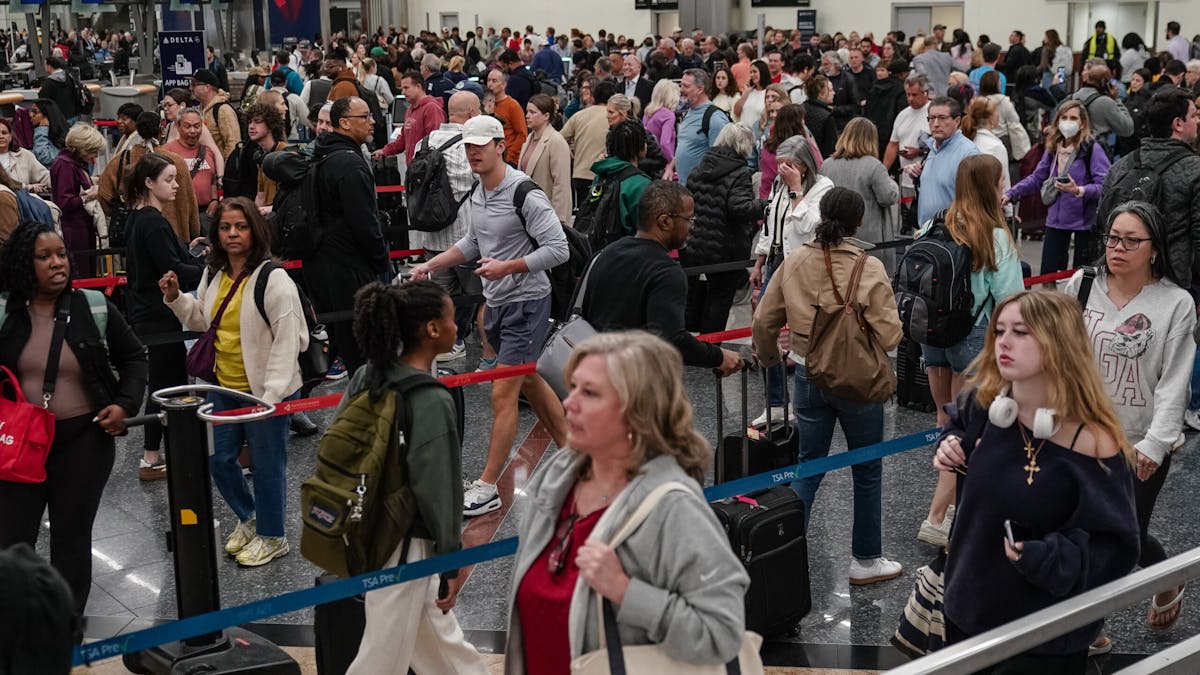
He acknowledged one tradeoff: longer security lines. “It’s going to add more people to the lines, and so it is going to lengthen the time. I can see that being a little bit of a challenge, so airports are going to have to figure that out.”
Gateside joins a string of TSA reforms under Trump. Last year, the administration ended the shoe-removal requirement at TSA checkpoints. The administration also began fully enforcing the REAL ID standard, meaning travelers 18 and older must now present a REAL ID-compliant driver’s license or passport to board domestic flights.
For millions of Americans who remember saying goodbye at the gate in the 1990s, Gateside is a small but significant return to normalcy — proof that security and hospitality don’t have to be mutually exclusive.
.@SecMullinDHS on TSA's new program allowing non-passengers to meet loved ones at the gate: "We came up with a program that doesn't compromise security at all – it's just a part of the known passenger process. We hope that it will help the passenger experience." pic.twitter.com/y2NKn4v90w
— Rapid Response 47 (@RapidResponse47) September 8, 2026