
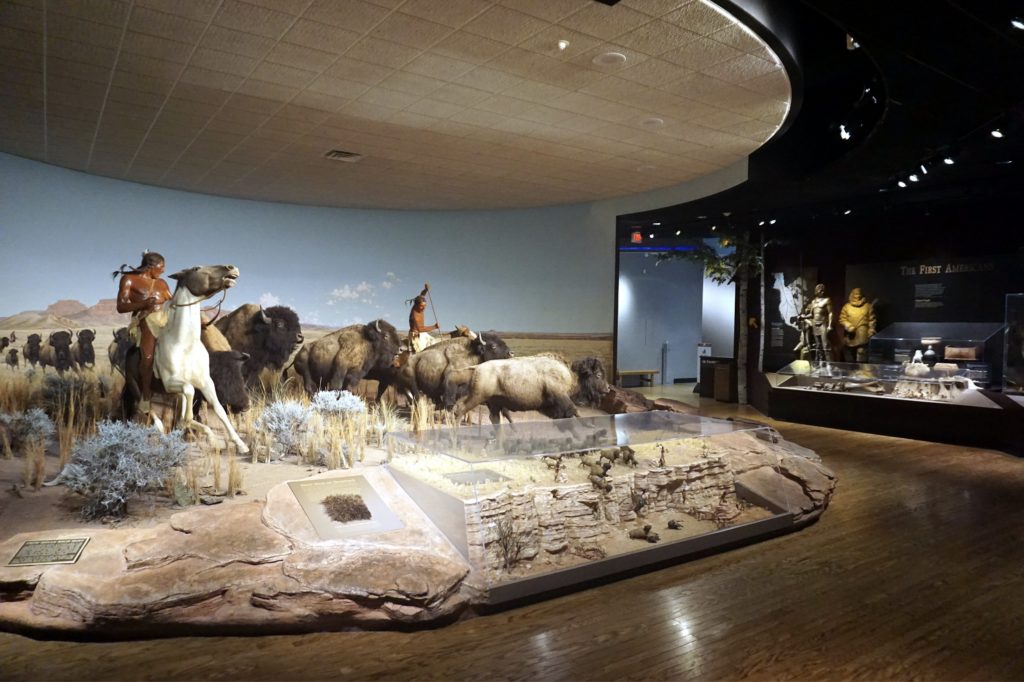
Congressman Tim Burchett confronted Smithsonian leadership with a question they couldn’t dodge: if America truly sits on stolen land, why won’t you give your property back to the tribes?
The Tennessee Republican opened congressional hearings on the Smithsonian Institution by playing video clips of Anthea Hartig, director of the National Museum of American History, repeating land acknowledgments at museum events. Hartig routinely thanked specific tribes and expressed gratitude for “the opportunity to work and live in their territories.”
Hartig didn’t say the events occurred on land previously inhabited by American Indians. She said they occurred on land that is presently “their territory.”
“I’m wondering have you ever planned on donating any of your personal property or any of the property of the Smithsonian to any of these tribes?” Burchett asked.
Hartig’s response: “I don’t believe that is pertinent to the conversation, sir.”
Throughout the hearing, Hartig emphasized that land acknowledgments and even the question of “loving America” are “complicated.” But the issue isn’t complicated in the way Smithsonian leadership claims.
The Smithsonian is pushing a genocide narrative — and calling it neutral history.
Smithsonian Secretary Lonnie Bunch and Hartig consistently claim they present a nuanced, unbiased narrative of America’s story. But a Smithsonian video titled “The Indian Problem” explicitly states that the United States committed genocide against American Indians.
Genocide is legally defined by the UN genocide treaty as the deliberate, intentional, planned extermination of a particular national, ethnic, racial, or religious group. An exhibit curator in the video declares: “We don’t make the case that there was genocide. We know that there was.”
On July 4, 2026, the White House issued a scathing critique titled “Saving America’s Story” that denounced museum leaders for reframing “America’s founding as a fundamentally oppressive and genocidal effort to take Native American’s land and oppress their culture and peoples.”
The “stolen land” narrative has become dominant in universities, cultural institutions, and schools. The National Education Association developed a guide for land acknowledgments instructing teachers: “Don’t sugarcoat the past. Use terms like genocide, ethnic cleansing, stolen land … to reflect actions taken by colonizers.”
The “stolen land” interpretation isn’t unbiased history. It’s a weaponized concept designed to delegitimize America’s founding and justify transforming the nation.
Who stole land from whom? The Lakota Sioux claim the Black Hills of South Dakota as sacred land. They successfully sued the U.S. government before the Supreme Court in 1980 and were awarded compensation — but refused payment, demanding the land instead.
Justice William Rehnquist noted in his dissent that while criticizing the U.S. government’s “less than admirable tactics,” he observed “the Indians were not lacking their share of villainy either.”
Around 1776, the Lakota Sioux arrived in the Black Hills and took the land from the Cheyenne and the Crow. Earlier, the Cheyenne had driven out the Kiowa from that same land.
History is complicated. As Americans celebrating our 250th anniversary as an independent republic, a different type of land acknowledgment is overdue — one that celebrates American greatness:
“We acknowledge and are grateful for those Americans who have gone before us. So here is to the Pilgrims and the pioneers; the settlers and the homesteaders; the farmers and the ranchers; the frontiersmen and the cowboys; the teachers and the preachers; the schoolmarms and the clergy and the sheriffs and judges — who brought Judeo-Christian civilization and law and order to the men of the Westward expansion; to the Oneida, Choctaw, and the Pawnee warriors, who in the Revolutionary War, the War of 1812, and the post-Civil War West respectively, fought with the United States and against our enemies; to the visionaries of Manifest Destiny and the statesmen and soldiers who made it happen. They all fulfilled Thomas Jefferson’s dream expressed in a Christmas Day 1780 letter to George Rogers Clark of an ’empire of liberty’ across the continent of North America. To all of them, we are grateful.”
Patriots know the difference between celebrating America and apologizing for it. The Smithsonian leadership has chosen the latter.