170 state Republican lawmakers are demanding President Trump appoint a Census Bureau director before the 2030 count — warning that without one, the agency will repeat the 2020 mistakes that handed blue states extra congressional seats they didn’t earn.
The Census Bureau has operated without a Senate-confirmed leader since early 2025, leaving the agency rudderless as it makes critical decisions about the 2030 Census. This leadership vacuum comes at a particularly sensitive time, as the bureau must finalize methodologies, allocate resources, and establish protocols that will shape how America counts its population for the next decade. The coalition, organized by the State Freedom Caucus Network, now includes lawmakers from across the country who say the bureau “has drifted from its constitutional mission.”
The Constitution mandates an “actual enumeration” of the population every ten years, a requirement the Founders established to ensure fair representation in Congress. That mission has become increasingly politicized as the bureau has adopted complex statistical methods that critics argue obscure rather than clarify the true count. For state legislators whose districts and political power depend on accurate population data, these methodological choices have direct consequences for their constituents’ representation in Washington.
Their concern isn’t theoretical. The Census Bureau’s own post-2020 analysis revealed it undercounted five of six mostly Republican states while overcounting six of eight mostly Democrat states. The result: blue states got more congressional seats than they deserved, while red states were robbed of representation. These errors, acknowledged by the bureau itself in post-enumeration surveys, represent the largest state-level counting discrepancies in modern Census history and have fueled Republican suspicions that the bureau’s methodological choices systematically favor Democratic-leaning populations.
“Mr. President, your Administration has rightly and consistently emphasized election integrity as a fundamental part of regaining America’s trust in our government. Key decisions are being made at the Census Bureau now that will affect America’s path forward.”
The lawmakers specifically attacked the bureau’s “continued reliance on differential privacy, statistical adjustments, and other methodologies,” which they argue “corrupt reported data to distort an actual enumeration of our citizenry” and “has eroded public trust.” Differential privacy, a mathematical technique intended to protect individual privacy while releasing aggregate data, has become particularly controversial because it deliberately introduces statistical noise into the data. While privacy advocates and the bureau defend it as necessary in the digital age, critics contend it makes the Census less accurate precisely when precision matters most for congressional apportionment and the distribution of hundreds of billions in federal funding.
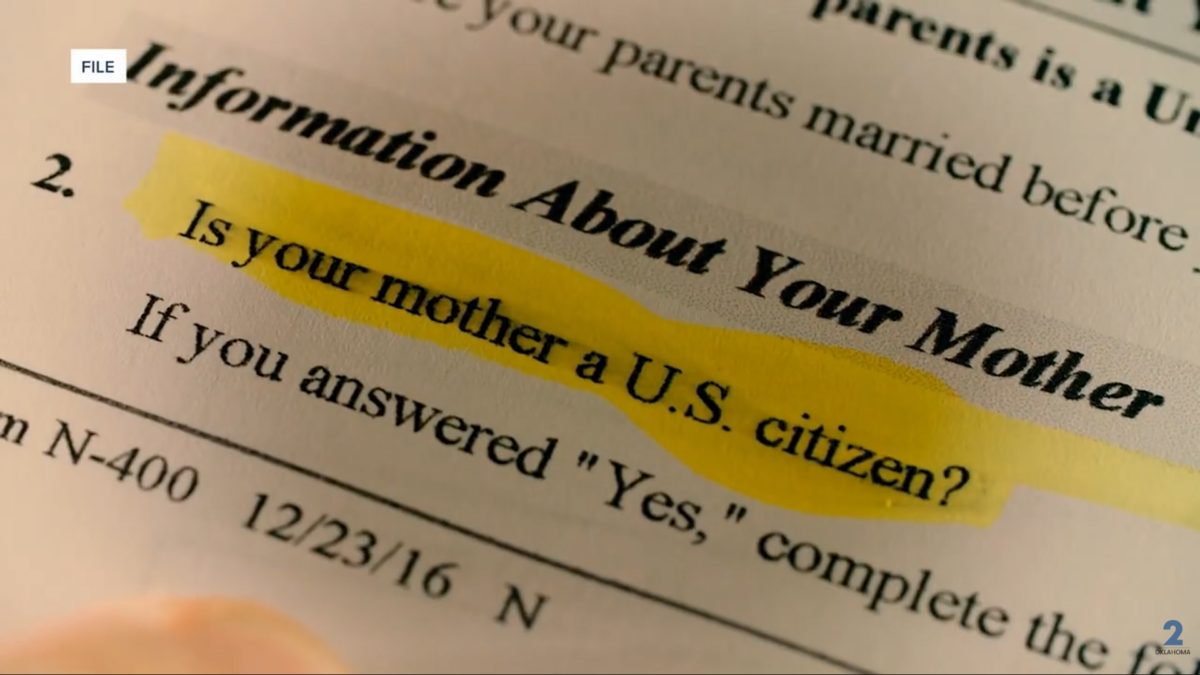
Another flashpoint: the citizenship question. Trump fought to include it on the 2020 Census during his first term, but the Supreme Court sided against the government on a procedural issue. The question’s removal, the lawmakers warn, has “empowered the non-citizen population count to deform congressional apportionment and state and federal redistricting.” The debate centers on whether states with large noncitizen populations should receive congressional representation based on total residents or only citizens and legal residents—a distinction with profound implications for political power distribution.
The stakes are clear. A January 2026 forecast by the American Redistricting Project estimated that an accurate 2030 apportionment without noncitizens would lead to California and New York losing House seats while Florida and Tennessee gain them. This represents a potential shift of political power from blue coastal states to red Sun Belt states, explaining why the issue has become such a partisan battleground.
The Census Bureau is currently being led by Acting Director George Cook, who serves as deputy under secretary in the Office of the Under Secretary for Economic Affairs. But acting directors don’t carry the authority or accountability of a Senate-confirmed appointee. Without Senate confirmation, acting directors serve at the pleasure of the president and lack the institutional independence that comes with surviving the confirmation process. This creates uncertainty within the bureau about long-term planning and makes it harder to resist political pressure from either party.
Despite the growing pressure, the White House has remained silent on whether Trump plans to send a nomination to the Senate. The Federalist’s request for comment went unanswered.
The coalition’s letter frames the appointment as a matter of election integrity — a theme Trump has championed throughout his presidency. “Nominating a qualified Census Bureau Director at this crucial time,” the lawmakers wrote, “is an integral part of ensuring that the 2030 Census accurately fulfills its constitutional purpose.” By connecting Census accuracy to election integrity, the lawmakers are appealing to one of Trump’s signature issues and mobilizing the grassroots constituencies that have rallied around voting security concerns.
The Census Bureau’s count decides how many U.S. House seats each state is awarded — making it one of the most consequential federal functions. With the 2030 Census approaching, the clock is ticking for Trump to fill the vacancy and course-correct the agency before another rigged count hands Democrats seats they didn’t earn. The window for influencing Census methodology is closing rapidly, as key decisions about questionnaire design, outreach strategies, and statistical methods typically must be finalized years before Census Day.