A federal judge just handed Democrats a major victory in their fight to keep Trump from reforming mail-in voting — blocking the president’s executive order with only days before midterm ballots go out.
U.S. District Court Judge Indira Talwani issued a 14-day temporary restraining order Thursday blocking enforcement of the new U.S. Postal Service rule implementing Trump’s order.
The ruling marks the second time Talwani has sided with Democrats on this issue. The case is likely to be quickly appealed and could soon make its way back to the Supreme Court, which handed down a procedural decision earlier this week allowing the administration to move forward.
“This rule is a clear attempt by the federal government to interfere in elections it has no power to control. Today, a federal court halted it before this administration could wreak havoc on our elections.”
That’s New York Attorney General Letitia James — one of two dozen Democrat attorneys general who filed lawsuits to stop Trump’s order.
The case will have a significant impact on November’s midterms, as nearly one-third of Americans vote by mail and election officials argue there is not enough time to amend their systems to comply with the new directives.
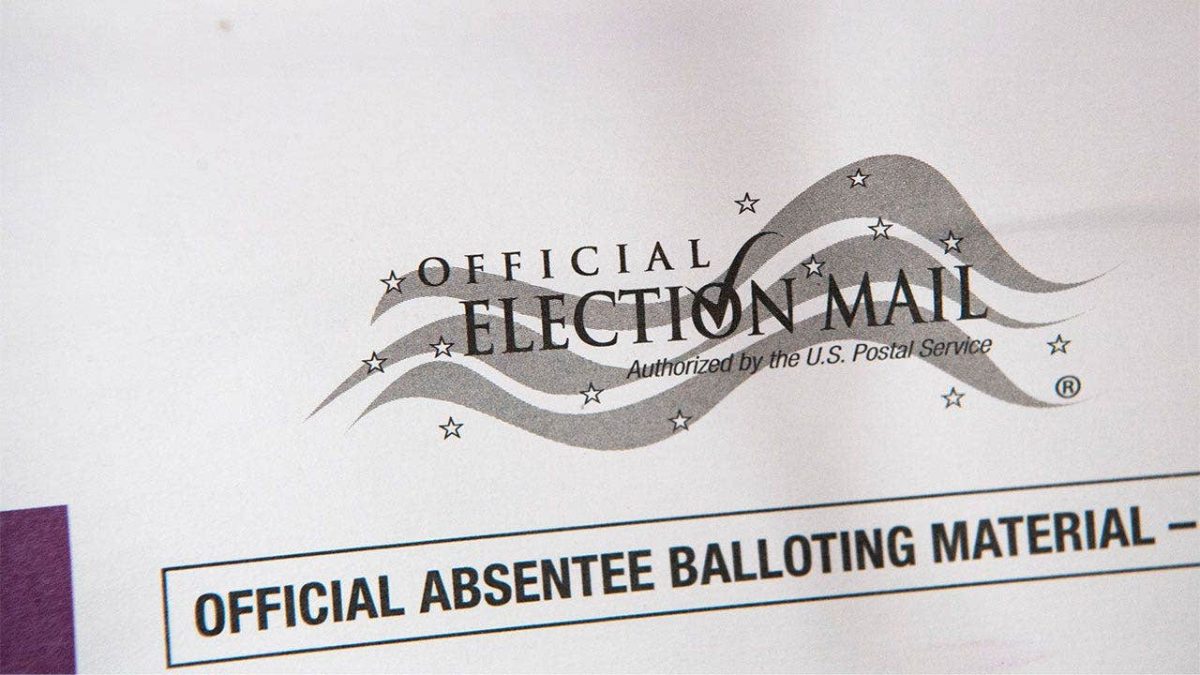
The Postal Service said it will not accept outbound mail ballots if states do not submit required recipient information through its portal and meet the rule’s envelope and barcode requirements.
Talwani wrote in Thursday’s ruling that plaintiff states “have neither time nor funds to design new mail ballots, seek approval of the new designs, order production of mail ballots, update their own election management systems, train election officials to use the USPS portal and upload citizen data to the portal, all before the midterms.”
A hearing in the case is scheduled for Sept. 3.
Democrats and voting rights groups argue that the Postal Service rule and Trump’s order are unconstitutional. They claim the Constitution grants states, as well as Congress in some cases, the authority to establish election rules — and that the president and Postal Service do not have that power.
USPS counters that the rule does not determine voter eligibility or compare submissions with state voter rolls, and that states retain control over who may vote by mail.
Trump’s executive order, issued in March, attempted to change election procedures by requiring additional physical documentation to register to vote — such as a U.S. passport, a REAL ID or military ID indicating U.S. citizenship, or a government-issued photo ID accompanied by proof of citizenship.
Trump has long criticized mail-in voting, which he attributes to irregularities in the 2020 election. According to a 2025 report by the Brookings Institution, mail-in voting fraud was recorded in only about four cases out of every 10 million mail ballots cast. The analysis covered general elections from 2016 through 2022.
Thursday’s ruling comes after Democrats and voting rights groups refiled their lawsuits to comply with the recent Supreme Court decision. The high court did not address the legality of Trump’s order, only finding that Talwani had acted too soon.
The administration has now issued a formal rule governing how states must prepare and submit mail ballots for USPS acceptance, effectively taking the legal fight back to square one.
In a separate case, a federal judge in Washington declined earlier this year to block the order at that stage, finding the challenge premature because the administration had not yet implemented the directive.
The Supreme Court struck down one of the earlier holds this week. Talwani removed the second injunction a short time later. The plaintiffs then refiled their challenges, pointing to the Postal Service’s publishing of its final rule.
The next move is Trump’s — and patriots know he doesn’t back down from a fight over election integrity.