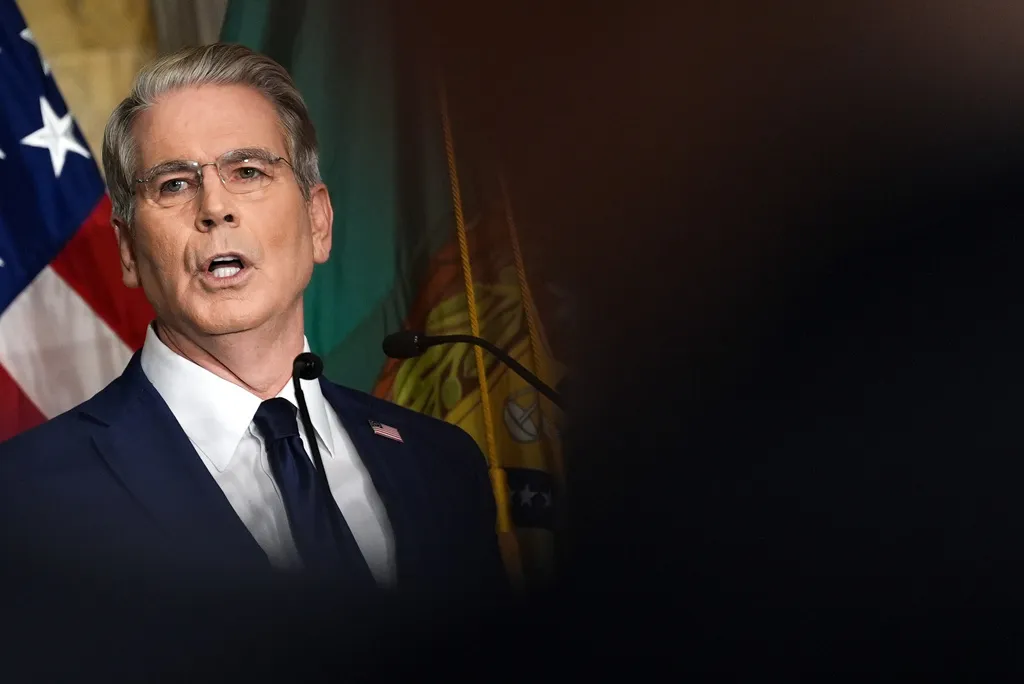
Treasury Secretary Scott Bessent promised an “economic D-Day” against Iran and the foreign banks keeping its war machine alive. But when Monday arrived, the Trump administration delivered something else: a warning shot.
✓
The White House rolled out a broad sanctions package targeting Iran’s aviation, digital currency, gold, shipping, and technology sectors. Roughly 60 individuals, entities, and vessels accused of propping up Tehran’s economy through illicit commerce and sanctions evasion were named in the package.
The announcement came amid heightened tensions between Washington and Tehran, with the administration seeking to exert maximum economic pressure on the regime. The sanctions package represents one of the most comprehensive efforts to target Iran’s economic infrastructure since the administration took office, touching virtually every sector the regime relies on to generate revenue and evade existing restrictions.
But Bessent held back the most devastating weapon in the arsenal.
The treasury secretary stopped short of announcing sweeping secondary sanctions against foreign banks and financial institutions doing business with Iran — the move administration officials had signaled was on the table heading into Monday.
This omission did not go unnoticed by sanctions experts and foreign policy analysts who had been anticipating a more aggressive posture. The build-up to Monday’s announcement had suggested the administration was prepared to implement the kind of sweeping financial penalties that would force allied nations and neutral parties alike to make an immediate choice about their relationship with Tehran.
“ECONOMIC ASPHYXIATION” — BESSENT’S STATED GOAL FOR TEHRAN
Instead, Bessent said top administration officials — including President Donald Trump himself — would engage privately with leaders of countries to pressure them into cutting business ties with the regime.
This diplomatic approach marks a deliberate shift in strategy, prioritizing negotiation and bilateral pressure over immediate punitive action. The decision to pursue private engagement reflects a calculation that foreign governments may be more willing to cooperate when given space to adjust their policies without facing public ultimatums or immediate economic consequences.
Economic experts say the rollout looks more like a warning that the real D-Day is still to come.
Secondary sanctions targeting foreign banks would cut off institutions from the U.S. financial system entirely if they continue facilitating Iranian oil sales, weapons procurement, or sanctions evasion. That threat — enforced during Trump’s first term and later relaxed under Biden — brought Iran’s economy to its knees between 2018 and 2020.
The historical precedent is significant. During the previous administration’s “maximum pressure” campaign, Iran’s oil exports plummeted from over two million barrels per day to as low as 200,000 barrels per day at certain points. The Iranian rial lost more than half its value, inflation soared into double digits, and the regime faced mounting domestic unrest over economic conditions. Foreign banks largely abandoned Iranian transactions rather than risk losing access to dollar-denominated trade and U.S. financial markets.
The Biden administration’s subsequent decision to ease enforcement of these secondary sanctions allowed Iran to rebuild its export capacity and economic relationships, particularly with Chinese buyers who became the primary customers for Iranian oil sold outside formal channels.
The Monday package designates Iranian aviation companies, digital asset networks used to dodge financial tracking, gold traders funneling revenue to the Islamic Revolutionary Guard Corps, and shipping firms moving sanctioned oil across the globe.
These designations target the infrastructure Iran has built to circumvent existing sanctions. The aviation sector has long been used to transport goods and personnel supporting proxy militias throughout the region. Digital currency networks have emerged as a critical tool for Iran to move money without touching the traditional banking system that U.S. sanctions monitor most closely. Gold trading provides a tangible store of value that can cross borders without electronic tracking, while the shipping sector enables the regime to move oil to buyers willing to ignore Western restrictions.
Trump has made clear his administration will not tolerate Tehran’s nuclear ambitions, attacks on U.S. partners, or continued funding of terrorist proxy groups across the Middle East. The question now is whether private diplomatic pressure will work — or whether the administration will pull the trigger on the financial sledgehammer it held in reserve.
Bessent’s approach suggests the White House is giving foreign governments one last chance to comply before imposing sanctions that would force them to choose between doing business with Iran or doing business with the United States.
The calculation appears straightforward: by announcing targeted sanctions while holding back on secondary measures, the administration demonstrates both its seriousness and its willingness to allow space for cooperation. Countries that continue facilitating Iranian sanctions evasion now do so with full knowledge that harsher measures remain available and that the administration has already laid the groundwork for their implementation.
Patriots know how Trump negotiates. He doesn’t lose to bullies.