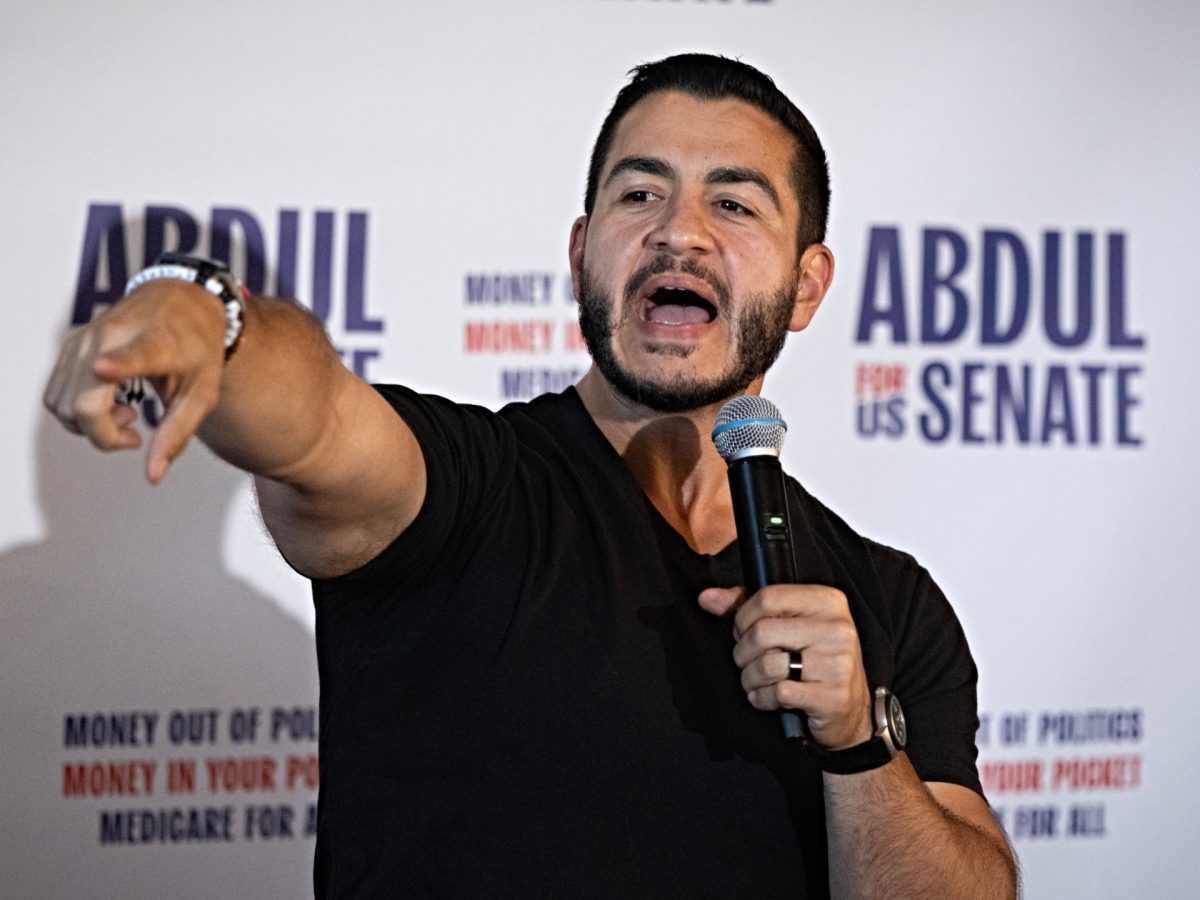
Michigan Democrat Senate candidate Abdul El-Sayed launched a personal attack on Vice President JD Vance’s marriage after the VP criticized El-Sayed’s defense of Sharia law — proving Vance’s point about the radical left’s priorities.
The exchange comes at a critical moment in Michigan’s closely watched Senate race, where Republicans are seeking to flip a Democratic-held seat in a state that has become increasingly competitive in recent election cycles. The controversy over Sharia law and religious freedom has emerged as an unexpected flashpoint in a campaign that both parties view as essential to controlling the Senate majority.
During a recent speech to American workers, Vance called out El-Sayed’s past claim that criticizing Sharia law amounts to white supremacy.
“I’d love to go back in time and tell my Papaw that there’s a man who claims to stand for working people who says not only should we have Sharia law, but if you criticize it you’re a white supremacist.”
The Vice President’s remarks were delivered as part of a broader critique of what he characterized as the Democratic Party’s shift away from traditional American values and constitutional principles. Vance has made defending working-class concerns and constitutional governance central themes of his political messaging since taking office.
El-Sayed’s response? A cheap shot at Vance’s wife.
The Democrat posted on social media: “So do we think JD is taking Usha with him back in time to meet Papaw, or no…”
The attack fell flat. Vance’s wife Usha and her family are Hindu — they would not impose Sharia law on Americans, the very issue Vance was addressing.
The apparent implication of El-Sayed’s comment — suggesting that Vance’s marriage to someone of Indian heritage creates some kind of inconsistency — only served to muddy the substantive constitutional questions Vance had raised. Political observers noted that the response seemed designed to deflect from El-Sayed’s own controversial statements rather than address them directly.
El-Sayed has refused to apologize for what Breitbart News previously reported as “vile remarks” about Vance’s wife and family.
The controversy deepened when El-Sayed’s own campaign confirmed he complies with Sharia law in his personal life. In resurfaced 2009 comments, El-Sayed described following Sharia as a lifelong “obligation.”
This acknowledgment has become a focal point in the race, raising questions about how El-Sayed reconciles his personal religious practices with his obligations as a potential U.S. Senator to uphold the Constitution. The distinction between private religious observance and public policy advocacy has emerged as a key issue voters are being asked to consider.
During a follow-up interview, El-Sayed tried to flip the script, accusing Vance of suggesting some Americans are “less American than others.”
“My question to him is simply why is it… how do you look your parents-in-law in the eye and say that somehow they’re less American than you are,” El-Sayed said.
But Vance never questioned anyone’s American status. He questioned El-Sayed’s defense of imposing religious law that contradicts the U.S. Constitution — a position El-Sayed still won’t disavow.
The fundamental issue remains whether El-Sayed believes criticism of Sharia law constitutes white supremacy, as his previous statements suggested, and whether he supports any incorporation of religious law into American governance. These questions go to the heart of constitutional principles regarding the separation of church and state, questions that voters have a legitimate interest in understanding before casting their ballots.
A recent AARP survey found Republican Mike Rogers and El-Sayed virtually tied in Michigan’s Senate race.
The tight polling numbers underscore why both campaigns are fighting so intensely over every issue, and why this particular controversy could prove decisive with undecided voters in a state where margins are traditionally razor-thin.
The heated exchange highlights a central question for Michigan voters: should a Senate candidate who follows Sharia law personally and once called criticism of it “white supremacy” represent them in Washington?
Vance on El-Sayed: I would love to go back in time and tell my papaw, that there is a man who claims to stand for working people, who says not only should we have sharia law, but if you criticize it, you are a white supremacist. pic.twitter.com/t7RqCCJt5Y
— Acyn (@Acyn) August 21, 2026
So do we think JD is taking Usha with him back in time to meet Papaw, or no… https://t.co/JApcsCW4kU
— Dr. Abdul El-Sayed (@AbdulElSayed) August 22, 2026