President Donald Trump brought his signature winner-takes-all mentality to Washington’s Freedom 250 race Sunday — and his message to drivers wasn’t the cautious “be safe” you’d hear from most politicians.
Trump’s advice? Have fun.
The president told reporters that dwelling on safety was more likely to make a driver hold back — and less likely to help them win the race. It’s a philosophy that reflects Trump’s broader approach to leadership and competition, one that prioritizes victory and bold action over hedging bets or managing risk through restraint.
“I don’t wanna say sort of ‘be safe’ because it’s sort of a negative thought. Right? They don’t wanna think about that, because if they do, generally speaking, you’re not gonna win when you start thinking that way.”
Trump praised the drivers slated to race, adding he knew many of them by name and calling it “a great sport.” The president’s familiarity with the racing circuit speaks to his long-standing relationship with motorsports and the personalities who compete at the highest levels of American racing.
The Freedom 250 itself was a long time coming — and Trump made sure everyone knew who got it done. The race represents not just a sporting event, but a symbolic victory over bureaucratic inertia that had stymied efforts to bring high-speed racing to the nation’s capital for two decades.
🚨 PRESIDENT TRUMP JUST NOW: “They’ve been trying to do this for 20 years…when he came to see Trump, it got done in about 15 MINUTES!”
“So many people wanna come! 300,000+, they closed the bridges. Bigger and better!”
“I was hearing it’s gonna rain. I said, no it’s not!” 🔥 pic.twitter.com/dnTWNWykek
— Eric Daugherty (@EricLDaugh) August 23, 2026
Indianapolis Motor Speedway and INDYCAR owner Roger Penske had been trying to pull off a race in the nation’s capital for 20 years — visiting D.C. a staggering 211 times to get approvals, permits, and bureaucratic sign-offs. The sheer number of visits underscores the labyrinthine regulatory environment that typically governs major events in the heavily restricted airspace and security-conscious landscape of Washington, D.C.
Then Penske came to see Trump.
Trump said it got done in about 15 minutes. The stark contrast between two decades of bureaucratic delays and a quarter-hour executive decision illustrates the kind of decisive action that Trump has consistently championed as a hallmark of his administration.
“When he came to see Trump it got done in about 15 minutes and it’s turned out to be much bigger than we ever even thought possible,” the president explained. The comment reinforces Trump’s recurring narrative about cutting through red tape and delivering results where traditional governmental processes have failed.
The crowd proved him right. Trump estimated between 300,000 and 350,000 attendees showed up — so many that authorities closed the bridges into the city. Pre-event estimates had put attendance closer to 140,000. The more than doubling of expected attendance speaks to both the pent-up demand for such an event and the drawing power of a Trump-endorsed spectacle in the nation’s capital.
“It’s turned out to be I think bigger and better, and the weather is beautiful,” Trump said. “You know, I was hearing about rain all week long, it’s gonna rain, it’s gonna rain. I said, ‘No, it’s not.’ And this is as nice a day as I’ve seen in Washington in a long time.” Trump’s weather commentary, while seemingly lighthearted, fits into his pattern of projecting control and positive outcomes even over elements typically considered beyond anyone’s influence.
The festivities included multiple U.S. Air Force bomber and fighter jet flyovers — some roaring so low and loud they set off car alarms across the area. The military display added a patriotic dimension to the event, reinforcing the “Freedom 250” branding and connecting motorsports with American military might in a show of national pride.
🔥 LMAO! Multiple USAF bombers and fighter jets with FULL afterburner just RIPPED over DC, and it was so loud that CAR ALARMS are going off
If the leftists weren’t ALREADY mad about the Freedom 250 Grand Prix, they’re PIPING mad now 😂🤣
The sound of FREEDOM, BABY! 🇺🇸 pic.twitter.com/mkVo97SEtL
— Nick Sortor (@nicksortor) August 23, 2026
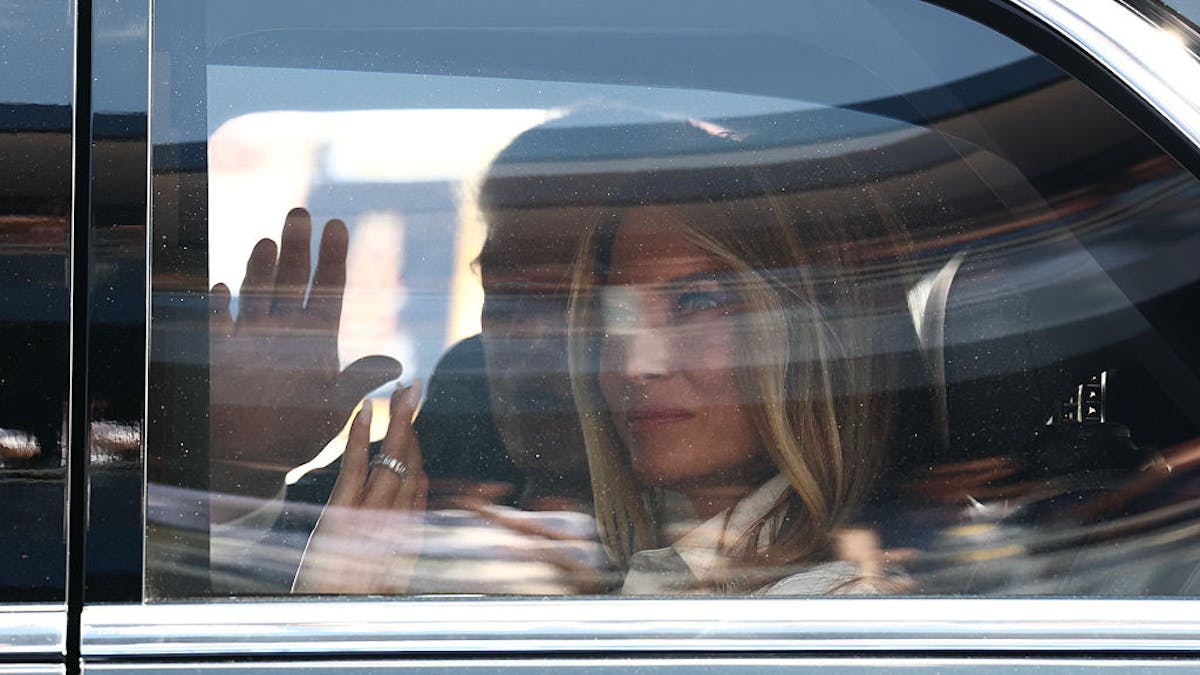
Before race time, Trump took a lap around the track in his armored presidential vehicle — The Beast. The presidential lap served as both a ceremonial opening to the race and another opportunity for Trump to personally associate himself with the success of an event he helped bring to fruition.