
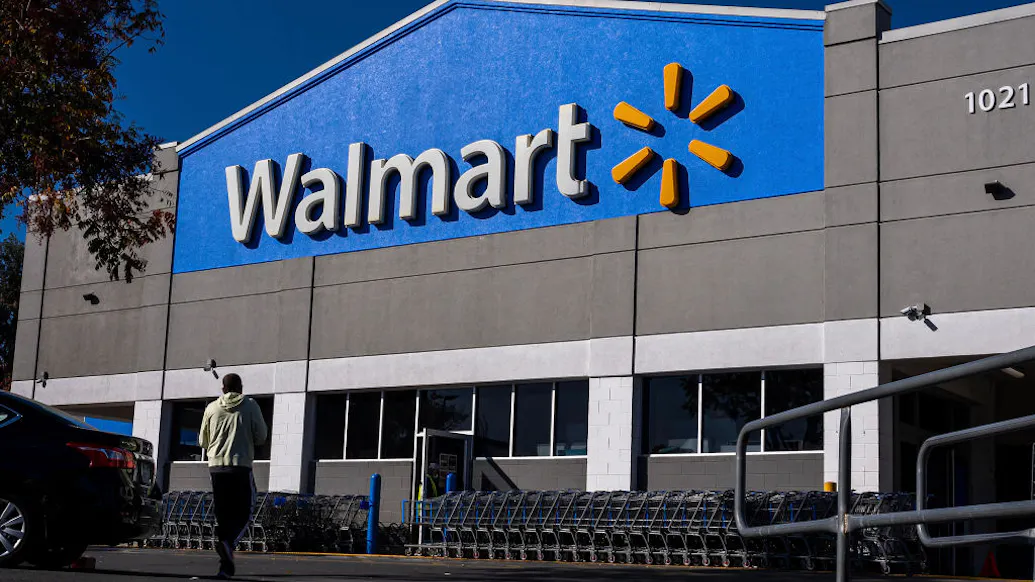
Walmart is handing grocery relief to millions of Americans — $2.9 billion in tariff refunds the retail giant just received are going straight into lower prices at the register.
The announcement comes at a critical time for American households still grappling with elevated grocery costs that surged during the pandemic and its aftermath. While inflation has cooled from its peak, food prices remain significantly higher than they were just a few years ago, leaving families searching for savings wherever they can find them.
The company announced Thursday it plans to invest the refund windfall in price cuts on groceries and general merchandise, with shoppers expected to see the impact starting in the third quarter.
The decision to pass the refund directly to consumers represents a strategic move by the nation’s largest retailer, which operates more than 4,600 stores across the United States and serves approximately 140 million customers weekly. By channeling the entire tariff reimbursement into price reductions rather than profits, Walmart is making a calculated bet that aggressive pricing will strengthen its competitive position in an increasingly tight retail landscape.
“We’re investing heavily in price because customers need us to and because we believe it drives market share gains over time,” Walmart CFO John David Rainey said in the company’s quarterly earnings call.
“We’re investing in prices because customers are looking to us for value.”
The tariff refunds stem from levies President Donald Trump imposed under the International Emergency Economic Powers Act — tariffs the Supreme Court later struck down. The legal battle over these tariffs stretched over several years, with importers and retailers arguing that the tariffs exceeded presidential authority and imposed undue financial burden on American businesses and consumers who ultimately bore the cost through higher prices.
The federal government has already refunded about $100 billion in IEEPA tariffs out of an estimated $166 billion owed, with roughly $66 billion still to be reimbursed.
The scale of these refunds underscores just how significant the now-invalidated tariff regime was on the American retail sector. For major importers like Walmart, which sources products from around the globe, the tariffs represented a substantial cost that either squeezed profit margins or translated into higher prices for shoppers during an already inflationary period.
Walmart received nearly all of its eligible refund and is putting it to work cutting prices on the items families buy most.
The retail giant already rolled out a wave of summer price cuts before the tariff refund announcement.
Fresh ground beef dropped from $6.74 to $5.94 per pound. A 24-pack of Coca-Cola fell from $14.97 to $9.97. Bags of red cherries went from $11.18 to $5.63.
These specific reductions highlight Walmart’s focus on high-visibility items that appear frequently in shopping carts. Staples like ground beef and soft drinks serve as price benchmarks that consumers use to gauge overall affordability, making them strategic choices for promotional pricing that can reshape shopper perception of the entire store.
“This summer, we’re making even more investments in price, with thousands of Rollbacks across the products customers are shopping for most, including beef, fresh produce and beverages, grills, pools, toys and summer fashion apparel,” said Walmart executive Julie Barber.
President Trump took credit for the summer price cuts in July, saying Walmart lowered prices at his administration’s request to celebrate America’s 250th birthday.
“Great news! I have just been informed that one of the biggest, best, and smartest retailers in America, Walmart, will be lowering prices, by a lot, at my Administration’s request to celebrate our great Country’s 250th birthday,” Trump said.
Walmart’s announcement of the summer rollbacks did not mention the Trump administration or attribute the price cuts to a request from the White House.
The discrepancy between the White House characterization and Walmart’s own messaging reflects the politically charged environment surrounding food prices, which have become a central issue for voters across the political spectrum. Retailers typically avoid explicitly political positioning, preferring to frame pricing decisions in terms of customer value and business strategy.
The company has historically proven resilient during periods of high inflation, when consumers turn to lower-priced retailers and cheaper store brands. Walmart is leaning into that advantage as families continue looking for relief from elevated prices.
This pattern has repeated itself through multiple economic cycles, with Walmart gaining market share during downturns as middle-income shoppers trade down from premium grocers and discount-conscious behavior becomes the norm across income brackets. The current environment, with persistent concerns about affordability despite cooling inflation, creates similar dynamics that favor value-oriented retailers.
With the tariff refund now flowing through to shoppers and thousands of rollbacks already in effect, Walmart is positioning itself as the go-to destination for Americans tired of paying Biden-era prices at the grocery store.