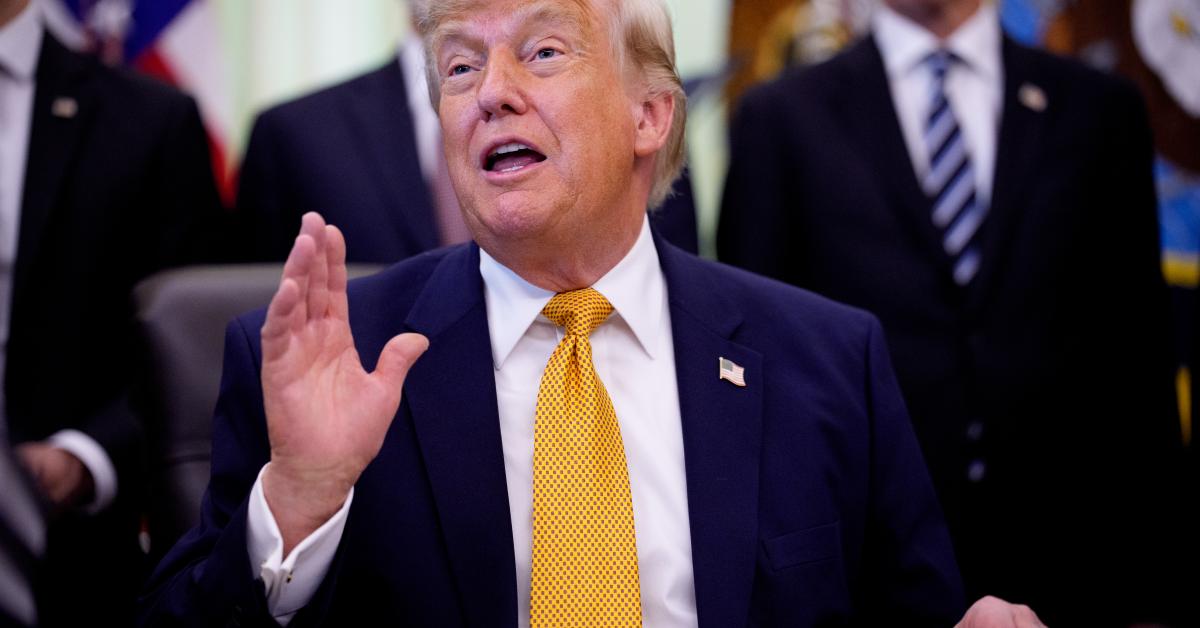
President Donald Trump said Wednesday he supports term limits for members of Congress, calling the idea “very popular with the public” while noting that elections themselves often serve as effective term limits.
The statement came during an unrelated White House event as the term limits debate has reignited following recent health crises among aging lawmakers. The issue of congressional term limits has been a recurring theme in American politics for decades, with advocates arguing that limiting time in office would reduce corruption and increase accountability, while opponents contend that experience and institutional knowledge are essential for effective governance.
Term limits for Congress have been proposed numerous times but have never gained enough traction to pass, partly because sitting members of Congress would need to vote to restrict their own careers. The Supreme Court ruled in 1995 that states cannot impose term limits on federal legislators, meaning any such reform would require a constitutional amendment — a high bar that demands two-thirds approval from both chambers of Congress and ratification by three-fourths of state legislatures.
Kentucky GOP Sen. Mitch McConnell has been absent from Congress for over two months after injuries from a fall June 14 resulted in hospitalization — information he initially withheld from the public.
New Jersey Rep. Tom Kean Jr. faced scrutiny when he disappeared from Congress for four months, missing 140 votes, and later revealed an ongoing struggle with depression.
These high-profile absences have raised questions about transparency and whether voters have a right to know about conditions that might affect their representatives’ ability to serve. The situations have also highlighted broader concerns about the advanced age of many congressional leaders and whether the current system adequately addresses fitness for office.
“I like to say that term limits should be elections, but I’m okay with term limits. Term limits are very popular with the public. I’ve seen it both ways. I’ve seen where people go in, and they get termed out… You end up with total rookies in there; nothing gets done. And I’ve seen it the other way, where people are there too long. We see that all the time.”
Trump acknowledged both sides of the debate — noting that forced turnover can leave Congress with “total rookies” where “nothing gets done,” while career politicians who stay “too long” create problems patriots see “all the time.”
The president’s nuanced position reflects the complexity of the issue. States that have implemented term limits for their own legislatures have produced mixed results, with some experiencing increased legislative turnover that brought fresh perspectives, while others saw a loss of institutional expertise that made it harder to pass complex legislation. Critics also point out that term limits can shift power to unelected staffers and lobbyists who provide continuity and knowledge that termed-out legislators lack.
Several aging lawmakers have been accused of concealing their true health status from constituents, fueling calls for age restrictions and mandatory term limits. The average age in Congress has been steadily rising, with the current session featuring some of the oldest leadership in American history. This demographic shift has intensified debates about whether age limits or competency tests should accompany any term limit reforms.
A recent poll found that 8-in-10 Americans across the political spectrum support congressional term limits and age restrictions.
The bipartisan nature of this support is notable in an era of deep political division. Voters from both major parties express frustration with what they perceive as entrenched incumbents who are more responsive to special interests than to constituents. This rare area of agreement suggests that term limits could be one of the few reforms capable of bridging the partisan divide, though translating popular support into actual legislative action remains a significant challenge.
The president did not commit to a hard stance, instead emphasizing he has “seen it both ways” — but his openness to the reform signals alignment with overwhelming public demand for accountability in Congress. Whether this presidential attention will translate into concrete legislative proposals remains to be seen, particularly given the structural obstacles to passing a constitutional amendment.
"I like to say that term limits should be elections, but I'm okay with term limits," President Trump said Wednesday when asked whether he would support term limits in Congress or cognitive testing for elected officials.
"Term limits are very popular with the public. I've seen it… pic.twitter.com/OazIMFDVr4
— CBS News (@CBSNews) August 19, 2026