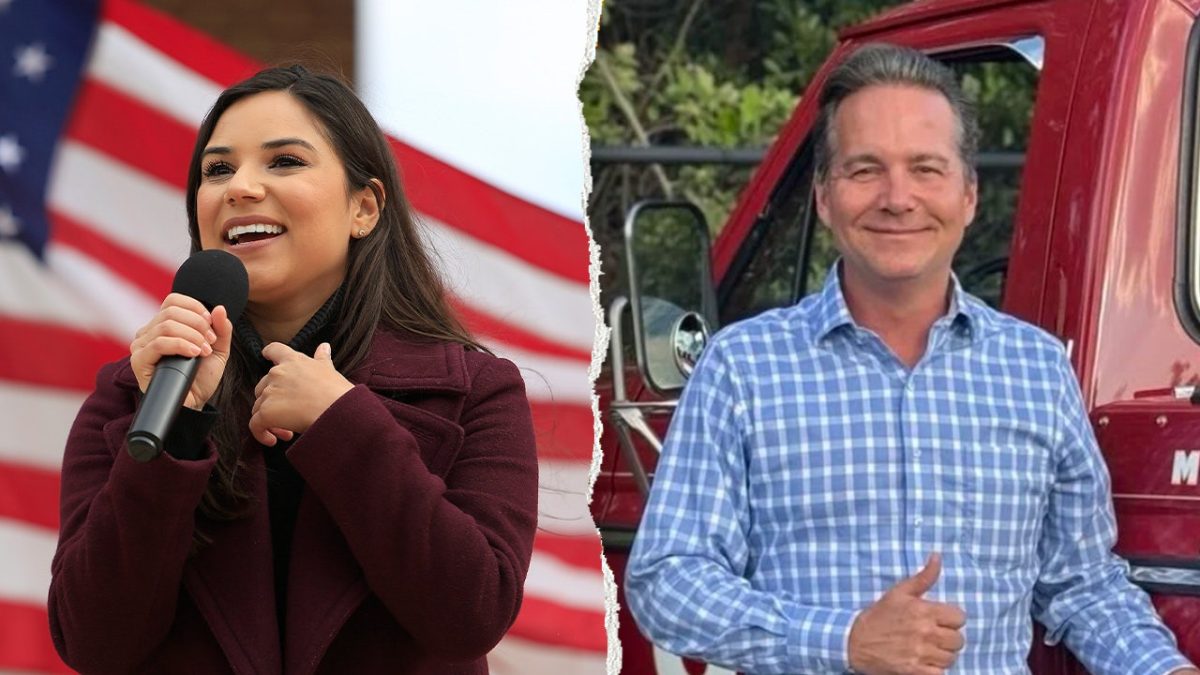
Florida media executive Jim Schwartzel won the Republican nomination for Florida’s 19th Congressional District Tuesday night, defeating Trump administration veteran Catalina Lauf despite President Donald Trump’s last-minute endorsement of his opponent.
The result marked a rare stumble in Trump’s otherwise dominant 2026 primary record and demonstrated the limits of even a presidential endorsement when it comes late in a race where voters have already formed strong opinions about the candidates and the nature of the contest itself.
Trump endorsed Lauf on August 13 — just days before voters headed to the polls — upending what had already become one of the most unusual congressional primaries in recent memory. The timing of the endorsement meant many early voters had already cast ballots, and Schwartzel’s campaign had spent months defining the race around questions of local ties and residency. Lauf served in the Department of Commerce during Trump’s first term, a credential that likely influenced the president’s decision to back her candidacy.
The endorsement’s failure to secure victory stands in stark contrast to Trump’s typical influence over Republican primary voters. As of mid-July, 97% of Trump-endorsed candidates had won their primaries this cycle. According to Ballotpedia’s election tracker, Trump’s endorsement success rate has remained at 93% or higher since 2018, making it one of the most powerful factors in determining Republican primary outcomes across the country.
Schwartzel’s ability to withstand the presidential endorsement suggested that local factors and candidate vulnerabilities can occasionally override Trump’s sway with the Republican base, particularly when concerns about carpetbagging have already become the central issue of a campaign.
“The president endorsed my opponent tonight. You’re hearing it from me before you hear it anywhere else. But let’s be precise about where that anger belongs. Not with President Trump. I’ve supported him from the beginning, and I’ll support him after Tuesday.”
Schwartzel told supporters the night of Trump’s endorsement that blame belonged with “the out-of-state super PACs that have poured millions into this district, the Washington consultants who packaged a candidate who ran for Congress twice in Illinois and sold her as Southwest Florida’s choice.” The statement reflected a careful political calculation: expressing continued loyalty to Trump while framing Lauf as the product of outside forces trying to influence a local race.
This messaging strategy allowed Schwartzel to separate Trump from the broader Washington establishment he campaigned against, preserving his standing with Trump supporters while maintaining his core argument about local authenticity.
The race to succeed Rep. Byron Donalds attracted national attention — and ridicule — for its crowded field of transplants and scandal-plagued former lawmakers. Donalds, a rising star in Republican politics, vacated the seat to pursue other opportunities, leaving an open contest in one of Florida’s safest Republican districts.
The candidate roster included former Rep. Madison Cawthorn, who lost his North Carolina seat after a series of scandals in 2022; former Rep. Chris Collins, a New York congressman convicted of insider trading; and Jim Oberweis, a wealthy former Illinois state senator. The presence of so many former officeholders from other states underscored both Florida’s continued appeal as a destination for Republican politicians and the challenges facing a party whose most prominent figures increasingly choose to relocate to more favorable political terrain.
Axios dubbed the contest “the GOP’s carpetbagger primary” and wrote that “whoever claws their way through the circus-like primary is almost guaranteed a ticket to Washington.” The characterization captured how the race became a national spectacle that highlighted tensions within the Republican coalition between longtime Florida residents and newer arrivals seeking to leverage the state’s political environment.
Schwartzel hammered Lauf throughout the campaign for running for Congress twice in Illinois before recently moving to Florida. He argued his ties to the state ran deeper than hers, positioning himself as the authentic local choice against a field of opportunistic outsiders. This line of attack proved effective in a state where questions of residency and commitment to Florida have become increasingly salient political issues.
Lauf fired back during a July debate, calling herself a “blue state refugee,” not a “carpetbagger.” The framing attempted to recast her Illinois background as an asset rather than a liability, aligning her story with the broader narrative of conservatives fleeing Democratic-controlled states for Republican governance.
“I came here, I didn’t have a choice to be born and raised in Illinois but I have a choice to live here,” she said. The argument sought to appeal to Florida’s large population of transplants who have relocated to the state in recent years, many for explicitly political reasons.
Beyond residency, the campaign also featured more traditional attack politics. Lauf accused Schwartzel of being behind the firing of a popular local meteorologist, an allegation that threatened to undermine his standing with voters who relied on his media properties for news and weather information. Schwartzel responded that although he owns several local media stations, he did not have an ownership stake in the network that fired the meteorologist. The exchange illustrated how Schwartzel’s prominence in Florida media proved to be both an asset and a vulnerability.
The winner will represent a safe Republican district in Southwest Florida, making Tuesday’s primary the de facto general election. The district’s partisan lean means Schwartzel is all but assured of victory in November and will join a House Republican conference navigating its role in the Trump era.