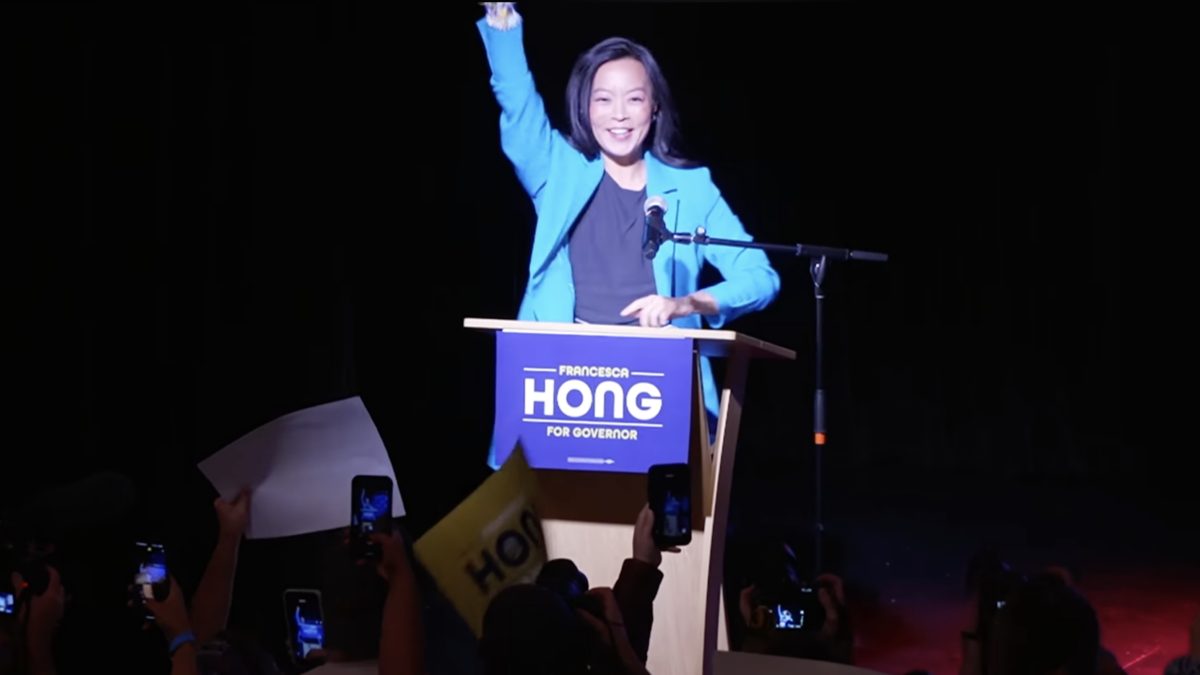
A polling company that showed Wisconsin gubernatorial candidate Francesca Hong 23 points ahead of her opponent and Los Angeles Mayor Karen Bass leading by double digits has admitted it was entirely fake.
Median Strategies — the firm behind both bogus polls — revealed it was running a “social experiment” to see how fabricated polling data spreads through political media. The revelation has sent shockwaves through an industry already struggling to maintain credibility with American voters who have grown increasingly skeptical of survey research following numerous high-profile polling failures in recent election cycles.
“Median Strategies has concluded its polling project and will not publish additional polls,” the company said in a statement. “All previously published polling releases have been withdrawn and should not be cited or treated as genuine polling data.”
“Median Strategies was created as a short-term social experiment examining how purported polling information could enter and spread through the political information ecosystem without independent verification.”
The statement raises serious questions about the verification processes employed by political news outlets and how easily false data can be injected into the media ecosystem. In an era when polling data frequently drives campaign narratives and influences fundraising, strategic decisions, and voter perceptions, the ease with which fabricated surveys gained traction highlights significant vulnerabilities in political reporting.
Hong, the far-left candidate in Wisconsin’s gubernatorial primary, was supposed to “shellac” David Crowley according to Median Strategies’ phony 23-point lead. The fictitious polling data was initially cited by multiple outlets without independent verification of the firm’s methodology or track record.
The firm also released fabricated data showing Bass leading challenger Nithya Raman by nearly 12 percentage points ahead of the November runoff. That poll was allegedly conducted between July 30 and August 5 among 560 Los Angeles voters with a 4.1 percent margin of error. The false survey included all the technical details that typically accompany legitimate polling releases, making it appear credible to journalists and political observers.
The Los Angeles Times later confirmed the Bass poll was also bogus.
The admission leaves Americans with even less reason to trust political polling — an industry already facing credibility collapse after years of high-profile misses. Public confidence in polling has steadily eroded as voters have witnessed repeated instances where survey data failed to accurately predict electoral outcomes, leading many to question whether the entire enterprise has become fundamentally broken.
In 2024, the final PBS/NPR/Marist election poll showed Vice President Kamala Harris leading by 4 percentage points outside the margin of error. The Washington Post reported days before Election Day that Harris had a “big early-vote lead” over Trump. Fortune ran a headline declaring Trump “just blew a huge lead” after his Madison Square Garden rally. These confident predictions, delivered with the authority of scientific measurement, proved dramatically off the mark when actual votes were counted.
Another pollster showed Harris leading Trump by 3 points in Iowa — before Trump won the state by double digits. The pollster later admitted it was a “big miss.” The Iowa result became emblematic of broader polling failures that characterized the 2024 cycle, raising questions about whether systematic biases or methodological flaws had rendered traditional survey techniques obsolete in the modern political environment.
It didn’t matter that the Biden administration and Harris had low approval ratings, or that the country faced a border invasion, high inflation, and unrest. The polls showed Harris winning, and media outlets ran with it. The disconnect between polling data and observable political conditions further fueled suspicions that surveys were reflecting the preferences of pollsters rather than the sentiments of actual voters.
Skeptics pointed back to 2016 when Americans were all but guaranteed President Hillary Clinton — with The New York Times giving her a 90 percent chance of beating Trump in mid-October. That failure marked a turning point in how many Americans viewed polling, transforming surveys from trusted indicators into objects of ridicule and suspicion.
Pollster John McLaughlin told The Federalist that some “media pollsters let their bias determine what they see in the polls, and it didn’t have to go that way.” His criticism reflects a broader debate within the industry about whether methodological challenges or ideological preferences better explain polling’s recent accuracy problems.
Now the revelation that Median Strategies’ polls were fabricated raises a harder question: how many other pollsters are running their own “social experiments”? The incident has exposed how little gatekeeping exists in political media when it comes to verifying the legitimacy of polling operations, potentially opening the door for bad actors to manipulate public perception through fake data.
So this is pretty wild: A polling firm that came out of nowhere to show Francesca Hong with a 23-point lead over David Crowley in the Wisconsin primary has shut down and said its whole operation was bogus pic.twitter.com/QTmlXkvGPC
— Brett LoGiurato (@BrettLoGiurato) August 18, 2026