
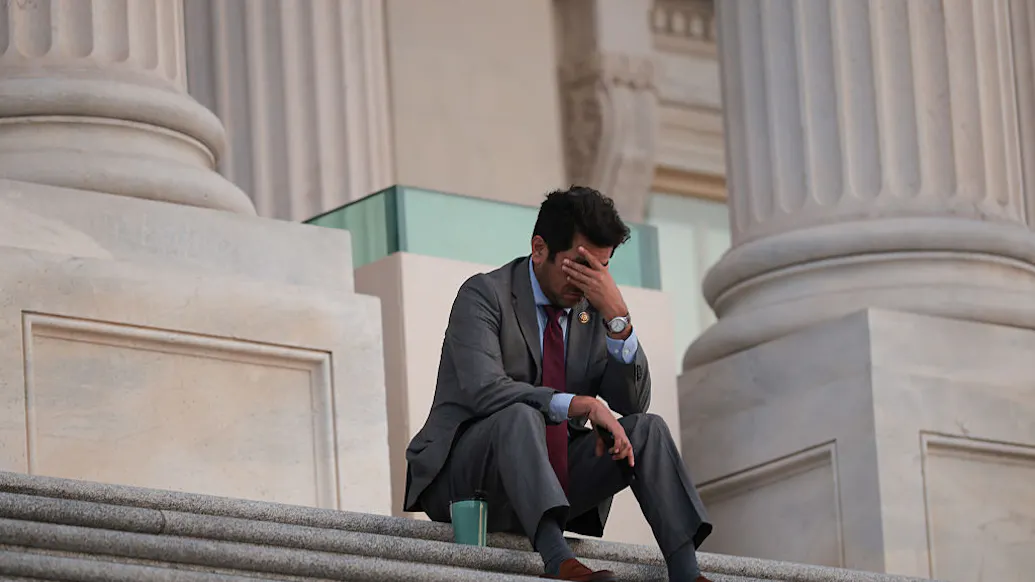
The House Ethics Committee has launched a formal investigation into Rep. Jimmy Gomez (D-CA) over allegations of sexual misconduct with a congressional staffer — the latest California Democrat to face scandal in what’s become an unusually turbulent year for congressional ethics.
The bipartisan committee announced Monday it is reviewing allegations that Gomez “may have engaged in sexual misconduct” in violation of House conduct rules, including “inappropriate sexual contact with a House staffer.” The investigation represents a significant escalation in a matter that first emerged publicly earlier this year, and adds Gomez to a growing list of members facing ethics scrutiny over workplace conduct and relationships with congressional staff.
The probe follows an April New York Post report that Gomez was seen kissing a much younger congressional aide in the backyard of then-Rep. Eric Swalwell’s Washington residence in August 2023. That initial report sparked questions about whether the encounter violated House rules governing member-staffer relationships, a gray area in congressional ethics that has come under increasing scrutiny in recent years as workplace conduct standards have evolved across American institutions.
“Years ago, I made personal mistakes outside my marriage that have caused real pain to my wife and family. Although my actions were consensual in nature and haven’t violated the law or House ethics rules, that doesn’t diminish the impact that these mistakes have made on those I care about the most.”
Gomez, 51 years old, acknowledged the extramarital conduct in June but insisted his actions were consensual and didn’t violate ethics rules. His public statement at the time sought to address both the personal dimensions of the situation and the potential professional ramifications under House regulations.
He told CNN he sought professional help to “re-center and heal” his relationships and would “move forward with honesty, transparency and respect.” The congressman’s response reflected an attempt to manage both the political fallout and personal consequences of the allegations while maintaining his position that no formal rules were broken.
The congressman said Monday he would cooperate with the investigation. The committee cautioned that an investigation does not itself establish that Gomez violated any law or House rule, and declined to provide further details on the allegation. This standard disclaimer accompanies all Ethics Committee investigations, emphasizing the preliminary nature of the inquiry and the presumption that members remain in good standing unless and until findings are made.
Gomez remains on the ballot for reelection in California’s 34th Congressional District. He advanced through the state’s top-two primary and will face far-left Democrat Angela Gonzales-Torres in November. The intra-party general election contest is typical for the heavily Democratic Los Angeles-area district, though the ethics investigation adds an unexpected variable to what might otherwise be a routine campaign.
The timing is particularly awkward: Swalwell himself resigned from Congress this year amid sexual misconduct allegations — and the alleged Gomez encounter occurred at Swalwell’s own residence. Swalwell has denied wrongdoing. The connection between the two California Democrats and the parallel nature of their controversies has fueled broader questions about workplace culture and accountability within the congressional delegation.
The Ethics Committee has also recommended that Rep. Chuck Edwards (R-NC) be censured after finding he violated House rules involving sexual harassment and created a hostile work environment. Edwards subsequently abandoned his reelection campaign and has denied wrongdoing. The bipartisan nature of recent ethics investigations underscores that congressional workplace conduct issues transcend partisan lines and have become a institutional priority for House leadership.
House Speaker Mike Johnson (R-LA) has endorsed a broader ban on sexual relationships between lawmakers and congressional staffers, calling them inappropriate in a workplace. Johnson’s position reflects growing recognition that power imbalances inherent in member-staffer relationships create potential for exploitation and complicate questions of genuine consent, even when both parties claim the relationship is voluntary.
Current House rules do not categorically prohibit members from engaging in relationships with staffers who work for other members, though a bipartisan task force is considering whether such relationships should be banned outright. This loophole has emerged as a central focus of reform discussions, as existing regulations primarily address relationships between members and their own direct employees while leaving relationships with other members’ staff in a less clearly defined regulatory space.
For now, the committee has not determined that Gomez violated House rules, and Gomez maintains his conduct did not constitute an ethics violation. The investigation could take months to complete, and possible outcomes range from complete exoneration to formal sanctions depending on what investigators determine about the facts and circumstances of the alleged misconduct.