President Donald Trump’s unconventional leadership team at the United Nations just pulled off something career diplomats said couldn’t be done — cutting $1 billion from the UN budget and eliminating over 4,000 bureaucratic posts in just six months.
The reformers leading the charge aren’t foreign policy veterans. They’re a former Green Beret congressman and a Pennsylvania real estate lawyer.
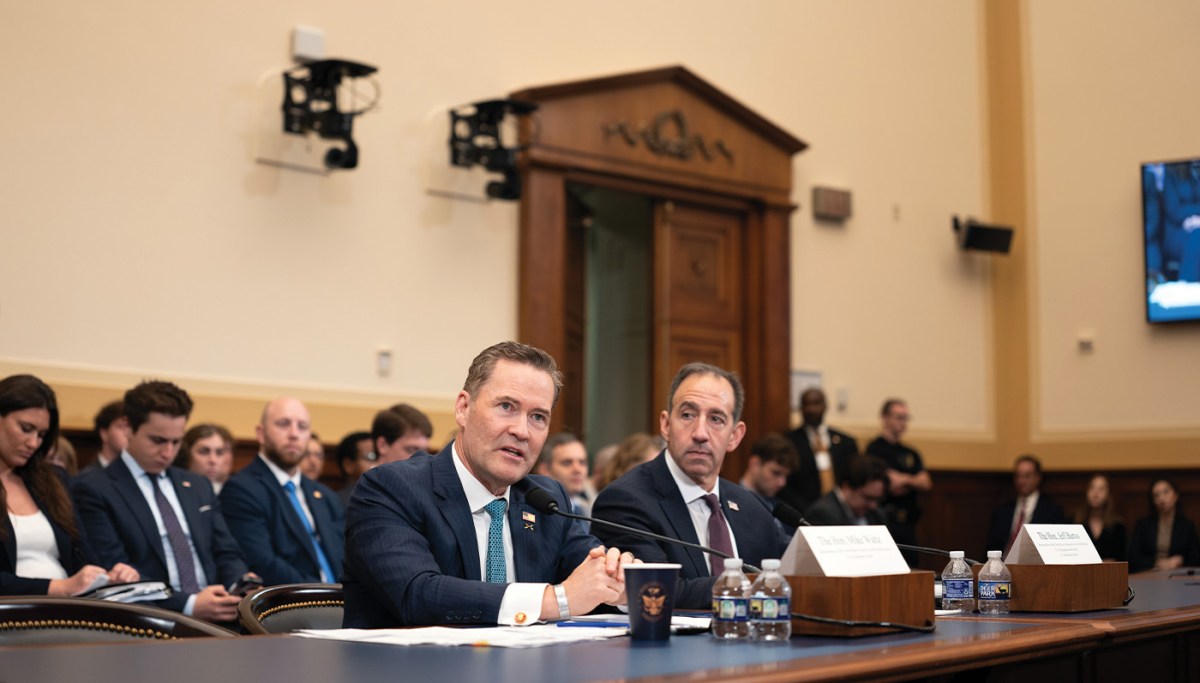
At a recent House Foreign Affairs Committee hearing, Rep. Dina Titus (D-NV) confronted Ambassador Jeff Bartos directly about his qualifications: “As I understand it, you had no prior government service, no diplomatic experience, and nothing really to recommend you to serve in this role, because you’re a real estate lawyer.”
The U.S. mission fired back on X, posting the clip with the caption: “Actually, the Rep. from Nevada is right! [Bartos] is not a career politician. He’s bringing a business leader’s resolve to reforming the UN.”
“We cut [the budget] by $1 billion over the last six months alone. And by the way, that requires consensus of all 190 countries to agree on every line of the budget.”
That consensus requirement — getting 193 member states to agree on budget cuts — is what makes the achievement so remarkable. U.S. Ambassador to the UN Mike Waltz, the former Green Beret, told lawmakers the organization had “tried to become all things to all people” while its budget tripled over 25 years. “I don’t think we’ve seen a tripling of peace break out around the world.”
Bartos, the Pennsylvania businessman nominated as deputy ambassador for management and reform, has an unlikely defender in Congress: Sen. John Fetterman (D-PA). The two were opponents in a race for lieutenant governor before forming what observers called a “political bromance.”
Fetterman told the Washington Examiner they are “doing a great job holding the organization accountable.”
Trump’s approach mirrors his signature management style — bypass the establishment, install outsiders, demand results. Waltz and Bartos don’t sound like traditional diplomats. During the July hearing, Waltz spoke about “mission” while Bartos hammered “leadership, execution, incentives, and accountability.”
They sounded less like ambassadors than executives conducting a corporate turnaround.
“My charge from President Trump is to help the U.N. realize its potential,” Waltz testified. “We are getting the United Nations back to basics, back to maintaining the peace and maintaining security around the world.”
Bartos focuses on management fundamentals most diplomats ignore — troop reimbursements, procurement formulas, pension obligations, warehouse logistics. He returned repeatedly to one idea: large institutions fail because of broken incentives, not ideology.
“What wasn’t there before we got to post was the leadership,” Bartos said. “The Trump administration has brought the leadership that so many reform advocates have been yearning for for their entire careers.”
The reforms target waste everywhere. Why are troops receiving rations based on 4,600 calories a day when modern military standards suggest far less? Why does the UN maintain pension structures that have disappeared from private industry?
Over the past year, the administration reduced roughly 4,000 civilian positions across the UN system and secured over $1 billion in budget reductions. Waltz described consolidating warehouses, logistics, and administrative support so more humanitarian funding reaches victims rather than supporting what he called a “nongovernmental organization industrial complex.”
“We are putting the U.N. on a diet. A healthier U.N. is a more useful U.N.”
Bartos traveled to the Central African Republic earlier this year, visiting refugee camps near the Sudanese border where hundreds of thousands have fled genocide. He watched UN humanitarian workers risk their lives providing food, water, medical care, and shelter.
“I’ve never been around a group of people who are risking their lives for total strangers at that scale,” Bartos said. “They’re not leaving hell to get to a hotel in Ibiza. They’re leaving hell to get to something slightly better than hell.”
That experience drives his reform push — the people risking their lives in refugee camps deserve an institution that works as efficiently as they do.
But budget cuts are the easy part. The harder battle: changing UN culture.
Francesca Albanese, the UN special rapporteur on Palestinian territories, repeatedly drew condemnation for statements the U.S. and allied governments viewed as antisemitic. The institution continues allowing her to operate under the UN banner.
Bartos didn’t mince words: “It’s impossible for me to reconcile that the same organization risking their lives working in Central Africa with one that allows a lunatic like Francesca Albanese to put on the U.N. uniform and spew her vile, anti-American, anti-West, anti-capitalist, anti-Jewish, anti-Israel vitriol.”
Then France erupted.
Days after the House hearing, the French UN mission attacked the U.S. over Bartos’s testimony about how the “U.N. human rights system has been losing credibility for decades.” France posted: “The U.S. used to be a beacon of human rights. Not anymore. Today, it stands alongside North Korea, Nicaragua, Mali & Russia, isolated.”
The American delegation staged a walkout during France’s remarks. The Senate Foreign Relations Committee posted ominously: “This is disappointing and shows just how opposed some are to sorely needed UN reform.” The committee specifically named Volker Turk, the UN high commissioner for human rights, warning: “Without real and systemic change, the U.S. will be forced to reconsider its entire relationship with the UN.”
Bartos suggested the real battle had barely begun.
“By slashing the U.N.’s budget and cutting over 4,000 bureaucratic posts over the past six months, we have made consequential and durable reforms to the U.N.’s spending problem,” he said. “While we continue to work every day on additional fiscal reforms, we are focused on reforming and repairing the institutional rot that former U.N. Ambassador Daniel Patrick Moynihan eloquently called out in his Nov. 10, 1975, General Assembly speech.”
Bartos reads Moynihan’s 1975 address monthly — the speech where Moynihan accused the UN of abandoning truth for politics after it equated Zionism with racism. That’s the standard Trump’s team is using 51 years later.
The budget battles required persuading member states to embrace better management. Repairing an institution whose culture and moral credibility have eroded over decades will require something far harder — persuading the UN to remember what it was created to stand for.
Actually, the Rep. from Nevada is right!@AmbUNReform is not a career politician. He’s bringing a business leader’s resolve to reforming the UN. pic.twitter.com/62i4FheVSL
— U.S. Mission to the UN (@USUN) July 22, 2026