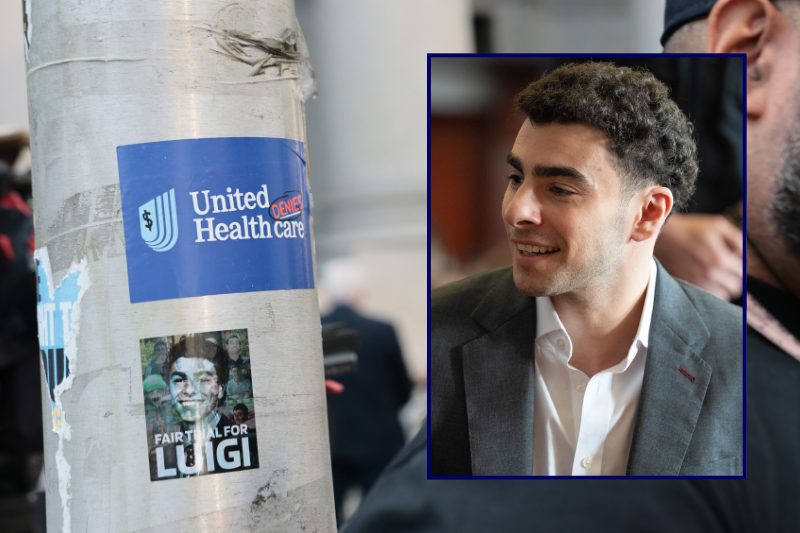
Luigi Mangione pleaded guilty Friday to federal stalking charges in the case involving the December 2024 incident that took the life of UnitedHealthCare CEO Brian Thompson.
The 28-year-old entered the plea during a hearing in U.S. District Court for the Southern District of New York in Lower Manhattan before U.S. District Judge Margaret Garnett.
When the judge asked how he pleaded to both stalking counts, Mangione answered: “guilty.”
“I knew what I was doing was illegal. I shot Mr. Thompson and he died.”
That courtroom admission marks a dramatic turn in a case that has dominated headlines for months. The statement represents the first time Mangione has acknowledged criminal responsibility in open court, fundamentally shifting the legal landscape of a prosecution that has drawn intense public scrutiny since the incident occurred outside a Manhattan hotel last year.
Mangione now faces sentencing in his federal case on Friday, December 18th.
The federal charges against him include travel in interstate commerce resulting in death and use of interstate facilities resulting in death. These federal charges were brought alongside state-level prosecution, creating a dual-track legal process that legal observers have noted is unusual in cases involving a single victim. Each charge carries a potential life imprisonment sentence if convicted.
In January, Judge Garnett dismissed one count of discharging a firearm equipped with a silencer during a crime of violence and one count of using a firearm in connection with that crime — eliminating the possibility of the death penalty at the federal level. That ruling narrowed the scope of federal liability while still leaving Mangione exposed to the most serious non-capital penalties available under federal law. The dismissal came after defense attorneys argued procedural grounds related to the specific statutory language governing firearm enhancements.
Sources told NBC News that Mangione met with his legal team Thursday morning at the Metropolitan Detention Center in Brooklyn ahead of Friday’s hearing. Plea negotiations were reportedly ongoing until the moment he entered the courtroom. The last-minute nature of the agreement suggests that both sides were weighing complex strategic considerations, including the interplay between the federal case and the pending state charges.
The federal plea comes just weeks before Mangione’s New York state case is set to begin. Legal experts have noted that a guilty plea in federal court does not bind the outcome of state proceedings, which operate under separate sovereigns and involve distinct charges. At the state level, he faces nine charges — including one count of second-degree felonious conduct, two counts of second-degree criminal possession of a weapon, four counts of third-degree criminal possession of a weapon, one count of fourth-degree criminal possession of a weapon, and one count of second-degree criminal possession of a forged instrument.
Mangione has pleaded not guilty to all state charges. This divergence in plea strategy reflects the different evidentiary standards, procedural rules, and potential outcomes between the two court systems. Defense attorneys in cases involving parallel state and federal prosecutions often navigate competing priorities, and Mangione’s approach underscores the complexity of defending against charges in multiple jurisdictions simultaneously.
The state case involves Thompson, a 50-year-old father of two who led one of the nation’s largest health insurance companies. Thompson had been in New York for an investor conference when the incident occurred, an event that sent shockwaves through the corporate community and raised questions about executive security protocols. Jury selection for that case is scheduled to begin September 8, 2026.
The judge overseeing the state proceedings has ordered an anonymous jury due to concerns about harassment or outside influence — a rare move that signals the high-profile nature of the case. Anonymous juries are typically reserved for cases involving organized crime, terrorism, or situations where juror safety may be compromised. The decision reflects both the media attention surrounding the case and the polarized public reaction it has generated since the incident became public.
The charges remain allegations in the state case. That case has not been proven in court. While the federal guilty plea may influence public perception, prosecutors in the state case will still be required to present evidence and meet their burden of proof independently before a jury that will be instructed to consider only the facts presented during that trial.