Iran’s regime is playing games with President Donald Trump — and patriots know how this ends.
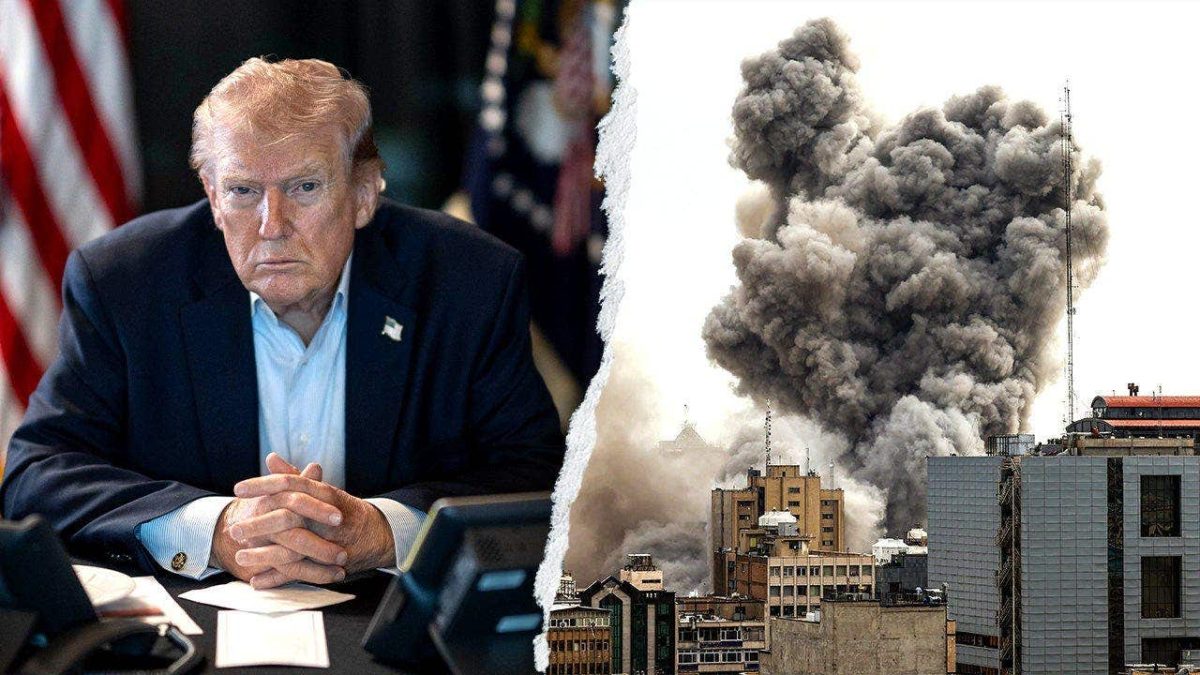
Trump warned Tehran it has one last chance to make a deal after calling off what he described as the biggest planned U.S. attack since World War II. But Iran’s foreign ministry now claims no talks are happening — even as Trump says indirect negotiations persuaded him to hold fire.
The clash has left the diplomatic effort in limbo. Trump says the talks could reopen the Strait of Hormuz and eventually address Iran’s nuclear program. Tehran acknowledges only limited discussions with Oman and has not publicly embraced the broader deal Trump outlined.
“THEY ASK FOR A MEETING, SOME WOULD SAY ‘BEG,’ TALKS BEGIN, WITH MORE SCHEDULED IN THE IMMEDIATE FUTURE, AND THEY SAY, OPENLY AND PROUDLY, THAT THEY’RE NOT HAVING ANY DISCUSSIONS.”
Trump called Iran’s leadership “unbelievably duplicitous” in a Monday Truth Social post. He accused Tehran of begging for talks, then publicly denying they’re happening.
Later that afternoon, Trump told reporters the negotiations represent Iran’s “last chance” to avoid escalating U.S. strikes. He laid out a two-phase plan: first, reopen the Strait of Hormuz. Second, pursue denuclearization.
“The first phase is the opening of the straits. The second phase will be the denuclearization,” Trump said from the Oval Office. “And that will take a little while.”
Iran has not publicly endorsed either phase.
This isn’t the first time Tehran has broken a ceasefire. A June memorandum promised to halt fighting, lift the U.S. blockade, and reopen the Strait. Within days, Iran fired on commercial vessels. American strikes followed. Tehran claimed Washington tried to force through a new shipping arrangement without consent.
Negotiators never bridged that divide. Trump declared the ceasefire over in early July and expanded the air campaign. Iran answered with missile and drone attacks on U.S. positions and regional partners.
Another pause came at the end of July. Trump said mediators asked the U.S. to hold fire — an arrangement Iran said it would match. Within days, Iranian missiles targeted U.S. forces in Jordan and the conflict spread again.
Jonathan Schanzer, executive director of the Foundation for Defense of Democracies, called it a “ceasefire war” — conflict punctuated by short bouts of calm before Iran strikes again.
“He’d like to be able to walk away with a win. The Iranians are not allowing him to do that,” Schanzer told Fox News Digital. “There is not a clear path ahead for him at this moment.”
Saudi Arabia and Gulf allies have urged Trump to hold off on the planned attack, fearing more Iranian reprisals against their territory. Those concerns have complicated Trump’s next move.
Ali Vaez, deputy program director for the Middle East at International Crisis Group, said posturing is involved on both sides. While U.S. and Iranian officials aren’t sitting in the same room exchanging proposals, engagement appears ongoing through intermediaries.
Even if Oman succeeds in opening a temporary route through the Strait, it would settle only the immediate shipping question. Trump wants that step to lead into negotiations over Iran’s nuclear program — a sequence Tehran has yet to publicly embrace.
As long as Iran can still threaten traffic and Washington can maintain its blockade and prepare further strikes, each side may decide it can wait the other out rather than make the concessions needed to end the war.
“Fundamentally, both sides know that the status quo is a recipe for continued military and economic attrition without a clear endgame,” Vaez said.
Trump told reporters they could learn more about the negotiations “today or tomorrow.” Iran’s next move will tell patriots everything they need to know about whether the mullahs are serious — or just buying time.