
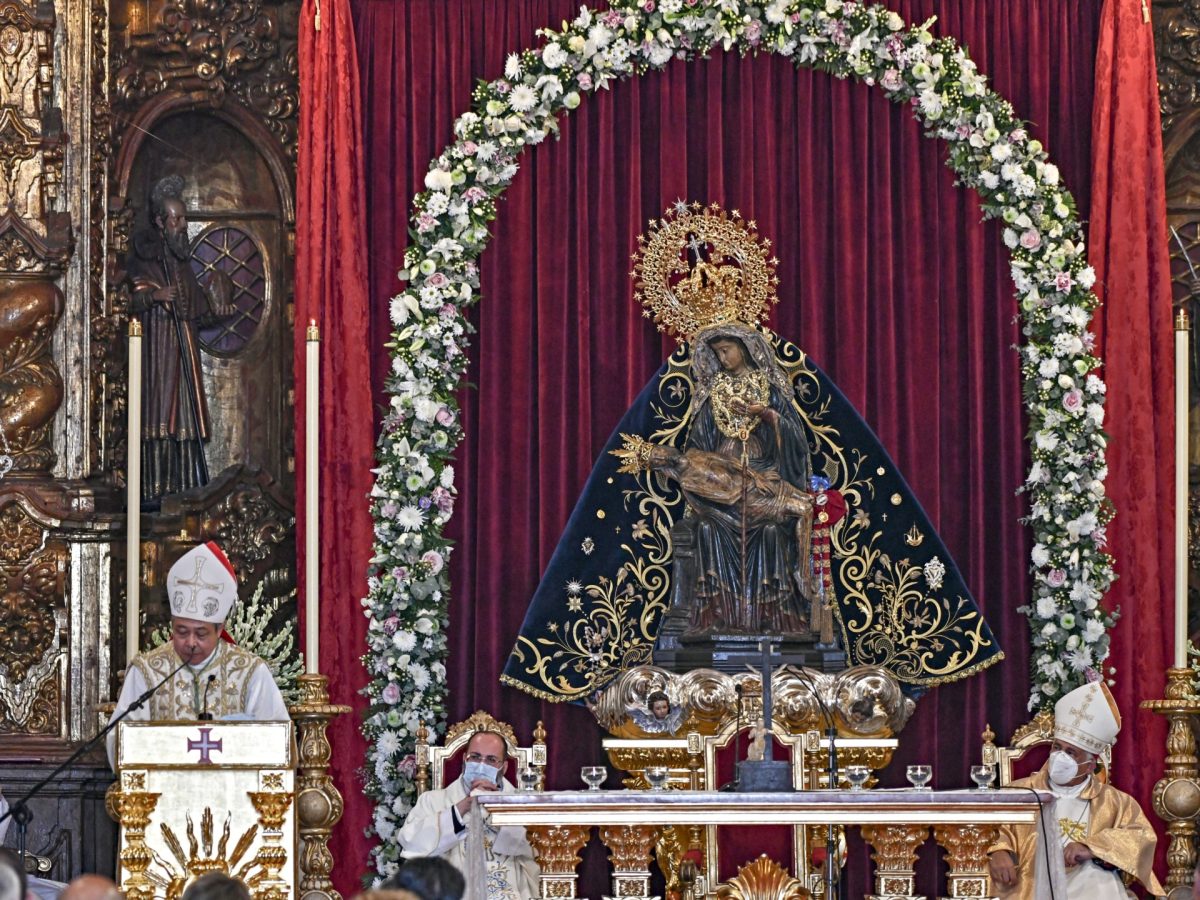
The Spanish enclave of Ceuta will hold its traditional Our Lady of Africa procession this week — refusing to let the massive illegal migrant invasion cancel centuries of Catholic faith.
The August 5 procession will proceed as planned despite 88 deaths during last week’s migrant chaos, when tens of thousands of Moroccan illegal migrants stormed the North African city.
Ceuta, an 18.5 square kilometer Spanish territory on the northern coast of Africa, has long stood as a symbolic and literal frontier between Europe and Africa. The autonomous city, along with its sister enclave Melilla, represents one of the European Union’s only land borders with the African continent. This unique geographic position has made Ceuta a frequent flashpoint for migration pressures, as those seeking to enter European territory view the small enclave as a gateway to Spain and the broader EU.
The Daily Mail reported Monday a huge mob of Moroccans chanting “Allahu Akbar” clashed with Spanish National Police during demonstrations. Footage showed officers with batons charging toward illegal migrants who had taken over the streets.
The scenes represented the most severe challenge to public order in Ceuta since the 2021 migration crisis, when approximately 10,000 people crossed into the territory in a single day. That incident had been precipitated by tensions between Madrid and Rabat over diplomatic issues, demonstrating how migration flows to the enclave are often influenced by broader geopolitical dynamics between Spain and Morocco. The current crisis, however, has exceeded even those troubling precedents in terms of casualties and the scale of unrest.
“Throughout the centuries, Ceuta has successfully faced all manner of challenges without losing what defines it: its faith, its traditions, and its deep love for its Patroness.”
The Brotherhood of Our Lady of Africa met with city authorities and security officials Sunday and agreed to hold the two most important events — a Floral Offering on Tuesday, August 4, and the Solemn Procession on August 5, when the statue of the Blessed Virgin Mary will transit through Ceuta’s streets under heightened security.
The decision came after Ceuta suspended all festivities planned between August 1 and 8, citing “uncertainty, instability, and concerns” following the worst migrant crisis the enclave has seen since 2021.
The suspension had initially encompassed all cultural and religious celebrations during what is traditionally one of the most important weeks in Ceuta’s liturgical calendar. The feast of Our Lady of Africa typically draws thousands of residents into the streets in a display of communal identity and religious devotion that transcends the city’s diverse population. The decision to carve out an exception for the two core religious events reflects the profound importance these traditions hold for Ceuta’s sense of civic cohesion, particularly during times of crisis.
The Brotherhood called the procession a demonstration that “our people remain united around Her.”
“True to that history and legacy, we are pleased to announce that both the Floral Offering and the Solemn Procession will take place as usual, allowing our city to once again come together with the Mother of all the people of Ceuta,” the Brotherhood said in a statement published Sunday.
Our Lady of Africa has been Ceuta’s Patroness since Pope Pius XII declared it in 1949. Her history in the city traces back to 1421, when Prince Henry the Navigator of Portugal sent a picture of Our Lady of Africa to Ceuta.
The centuries-long devotion reflects Ceuta’s complex history as a territory that has been under Portuguese and then Spanish control since the 15th century. The Marian devotion has survived multiple sieges, regime changes, and social transformations, becoming deeply interwoven with the city’s identity regardless of political circumstances. The image and cult of Our Lady of Africa has served as a unifying force for the enclave’s predominantly Catholic population through numerous historical challenges.
The city conferred the title of “perpetual Mayor of Ceuta” upon Our Lady of Africa in 1654.
This extraordinary civic recognition, granting symbolic political authority to a religious figure, underscores the inseparable relationship between faith and governance in Ceuta’s historical consciousness. The title remains officially recognized today, with the Virgin’s image presiding ceremonially over city council proceedings during significant occasions.
The local Ceuta government welcomed the news that the events “deeply rooted in the traditions and sentiments of the people of Ceuta” can proceed. Authorities expressed gratitude for the collaboration ensuring the procession counts with necessary safeguards.
Security arrangements for the procession will include reinforced police presence along the processional route, coordination with national security forces, and contingency protocols developed specifically in response to the ongoing instability. The heightened measures reflect authorities’ determination to protect both participants and the broader public while allowing this expression of cultural continuity to proceed.
The Brotherhood proclaimed: “May the streets of Ceuta once again be filled with faith, devotion, and affection for the Virgin, demonstrating once more that our people remain united around Her.”
The apocalypse in Ceuta. pic.twitter.com/S8rEJNJJip
— RadioGenoa (@RadioGenoa) August 3, 2026
E.U. Vows ‘Emergency Meeting’ Six Days After Ceuta Illegal Migrant Invasion Beganhttps://t.co/iP8FOZNF7u
— Breitbart London (@BreitbartLondon) August 2, 2026