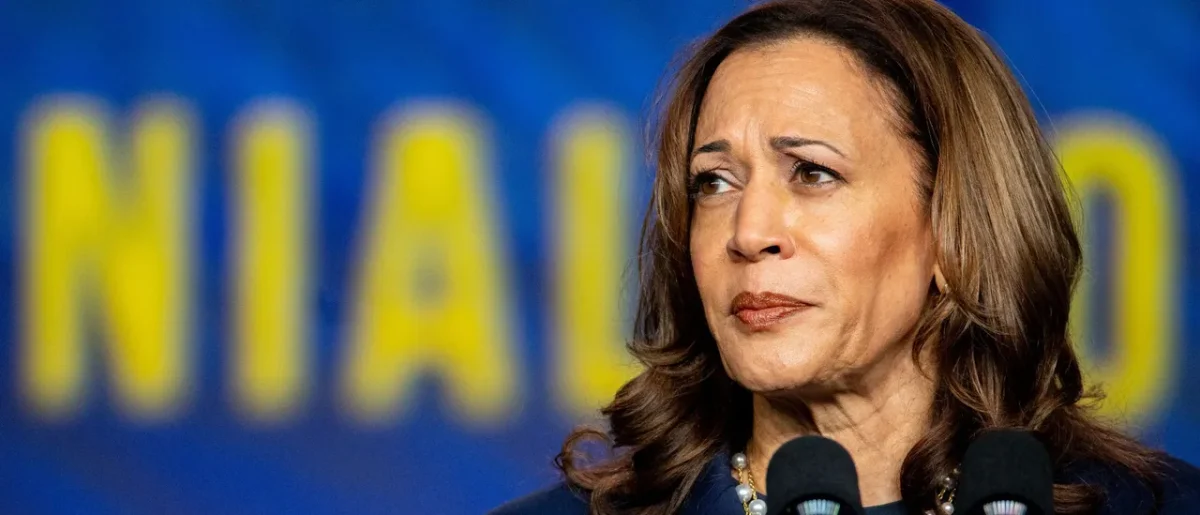
Kamala Harris just told the country exactly what she thinks of Joe Biden — by saying nothing at all.
The former vice president appeared Friday at the National Urban League Conference in Nashville, where NUL President Marc Morial asked her to name the most effective presidents in American history. Harris rattled off four names: Franklin Roosevelt, John F. Kennedy, Lyndon B. Johnson, and Barack Obama.
The one name she didn’t mention? Joe Biden — the man who picked her as his running mate and later handed her the 2024 nomination.
“Oh Marc, don’t make me do that,” Harris told Morial before launching into her answer.
The question itself wasn’t unusual for a political forum. Presidential candidates and former office-holders are routinely asked to identify leaders they admire or consider most successful. It’s a chance to signal values, align with historical legacies, and hint at governing philosophy. Harris had every opportunity to include Biden among her picks, especially given their shared administration and his role in elevating her national profile. Instead, she chose a list that conspicuously ended with Obama — Biden’s own former boss.
Harris praised FDR for building Social Security and defending government’s role during hard times. She credited him with understanding government’s three essential functions: public health, public safety, and public education.
She added JFK and LBJ to round out her top three, then brought up Barack Obama — drawing a burst of applause from the crowd. Harris praised Obama’s push for the Affordable Care Act.
Each name on Harris’s list carried symbolic weight. Roosevelt represented the New Deal coalition and activist government. Kennedy embodied youthful optimism and Cold War leadership. Johnson advanced civil rights and Medicare. Obama broke racial barriers and expanded health coverage. All are Democratic icons with signature legislative achievements and clear historical narratives. Biden, by contrast, was left out of that pantheon entirely — a pointed exclusion given that Harris served directly under him and could have easily praised his infrastructure spending, COVID relief efforts, or judicial appointments.
Kamala Harris snubs Biden when asked to name ‘most effective’ US presidents at Nashville event https://t.co/6NjSdVatgMpic.twitter.com/4bRkbW77ah
— New York Post (@nypost) August 1, 2026
Biden was nowhere in the answer. The omission comes as the two have feuded openly since Harris’s loss to President Donald Trump in November.
The rift between Harris and Biden has been one of the Democratic Party’s most uncomfortable open secrets since the 2024 defeat. What began as a partnership meant to unite the party’s establishment and progressive wings has deteriorated into mutual recrimination. Biden’s allies have suggested Harris ran a poor campaign. Harris’s camp has countered that Biden’s unpopularity and delayed exit doomed her from the start. The Nashville moment offered Harris a low-cost chance to mend fences or at least project unity. She declined.
Biden abandoned his reelection bid 107 days before Election Day and endorsed Harris on his way out. After she lost both the Electoral College and the popular vote to Trump, Harris blamed Biden’s White House in her book “107 Days” — writing that his communications team left her to absorb blame over the border crisis.
That book became a flashpoint in the ongoing blame game. By titling it after the compressed timeline she was given, Harris made clear she felt set up to fail. The border criticism was especially pointed, since Biden had assigned her a role in addressing root causes of migration — a portfolio that brought political risk but little control over actual policy. Her willingness to air those grievances in print signaled that any pretense of loyalty had evaporated.
The Nashville appearance doubled as an early look at a possible 2028 platform. Harris backed reforms she avoided during her 2024 run, telling attendees the country should scrap the Electoral College, grow the Supreme Court to 13 seats, and grant statehood to Puerto Rico and Washington, D.C.
These proposals represent a significant shift leftward from the cautious centrism Harris adopted as Biden’s heir apparent in 2024. Electoral College abolition and court expansion have long been progressive demands that mainstream Democratic candidates typically avoid in general elections. By embracing them now, Harris appears to be repositioning herself for a primary electorate still hungry for structural reform after back-to-back losses in the popular vote to Trump — the second of which she herself suffered.
“I have not made a decision,” Harris said of another White House bid, according to Fox News. “I am fully, sincerely, focused on these midterms.”
Democratic strategists still peg Harris as the party’s leading 2028 contender. She tops Gavin Newsom by 11 points and Pete Buttigieg by 17 points in the RealClearPolitics average, while courting the progressive wing through recent outreach to New York City Mayor Zohran Mamdani.
The snub in Nashville makes clear where Harris stands — and Biden isn’t standing with her.