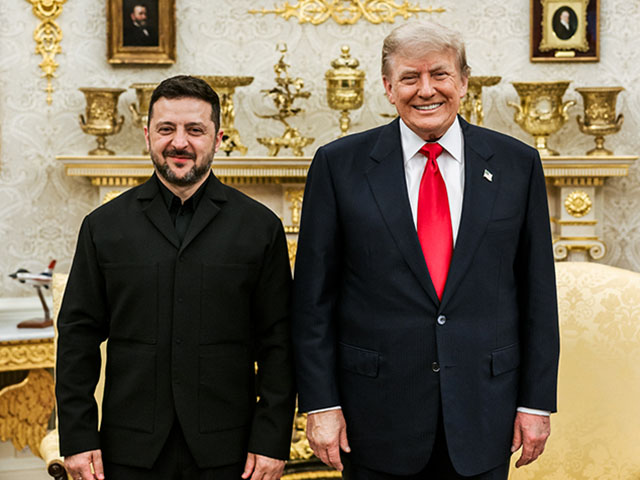
A top Ukrainian diplomat confirmed to NBC News that Washington and Kyiv have brokered an agreement to share drone technology, potentially allowing for military collaboration to improve American drone models.
The deal allows Ukrainian-made weaponry to be sent to the United States for military testing and evaluation, according to both a senior administration official and Ukraine’s ambassador to Washington, Olha Stefanishyna.
The move follows Ukrainian President Volodymyr Zelensky’s visit to the White House for a cordial meeting with President Donald Trump, preceding his attendance at the funeral of Sen. Lindsey Graham (R-SC). Both leaders described the meeting as positive, discussing potential paths to end the ongoing conflict in Ukraine.
Ukraine has positioned itself as a global heavyweight in drone technology — both in developing its own drones to resist the Russian invasion and in responding to the use of inexpensive Iranian “Shahed” drones on the battlefield.
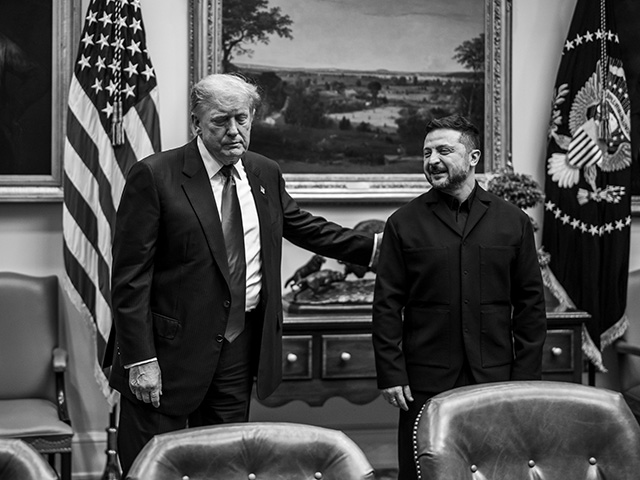
Zelensky has offered his Shahed experts to Gulf states facing periodic terrorist attacks by the Iranian regime. The experts are believed to be aiding with national security in Saudi Arabia, a routine target of the Iranian terror state.
NBC News speculated the agreement could hint at a munitions shortage in the United States after months of conflict with Iran, though the Ukraine conflict is distinct from Operation Epic Fury, America’s operations against the Iranian regime.
The line between the Russian invasion of Ukraine and America’s conflict with Iran has blurred on occasions. Ukraine has for years accused Iran of providing inexpensive suicide drones to the Russian military.
Zelensky appeared to flip that script recently before his visit to the United States, suggesting Russia is now the partner aiding Iran’s ongoing terror campaign against America and its allies.
“There is a clear correlation between Russia’s satellite imagery of these sites and Iranian strikes — both before the attacks, in preparation for them, and afterward, to assess the damage inflicted.”
In remarks to the public on July 25, Zelensky announced he would share intelligence relating to “Russia’s new assistance to the Iranian regime.” He accused Russia of offering satellite intelligence to help Iran effectively target American military facilities throughout the Middle East and to attack its Gulf neighbors.
Conversely, as a result of Iran’s aid to Russia, Zelensky revealed last week that his government had targeted and bombed Iranian vessels believed to be carrying military hardware for the Russian armed forces.
“We also achieved very strong results with long-range strikes in the Caspian Sea — including vessels used in military cargo shipments involving Iran, as well as a warship,” he said in a military update on Saturday.
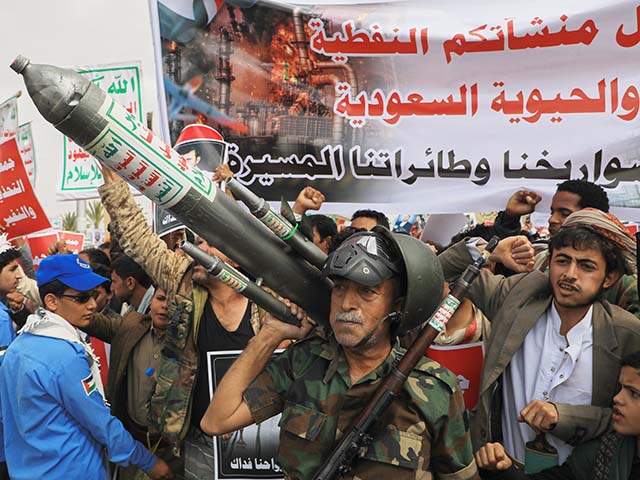
The Iranian regime reacted with outrage and threats to Zelensky’s revelation, warning that Tehran would retaliate. The Iranians also claimed the vessels targeted were not engaged in military activities.
“Zelenskyy has attacked an Iranian commercial vessel, killing a sailor. A blatant UN Charter violation done at Israel’s behest to drag Europe into its war,” Iranian Foreign Minister Abbas Araghchi complained. “In calls with EU High Rep [Kaja] Kallas and [Russian] FM [Sergey] Lavrov, made clear that what the freeloader in Kyiv did CANNOT GO UNANSWERED.”
Prior to this direct attack, Ukraine had already found a role in operations against Iran.
Zelensky visited the United Arab Emirates and Saudi Arabia in March, shortly after the Iran-U.S. conflict began, offering his country’s expertise in combatting Iranian military equipment. Both countries, along with neighbors such as Bahrain and Kuwait, were among the first targeted by Iranian strikes following the launch of Operation Epic Fury.
Saudi Arabia and Kuwait have continued to face targeted Iranian strikes.
The visit to Saudi Arabia resulted in the signing of a defense agreement in which Ukraine would “share … expertise and systems with Saudi Arabia and work together to strengthen the protection of lives,” according to the Ukrainian president.
“Ukrainians are resisting the same kind of terrorist attacks — ballistic missiles and drones — that the Iranian regime is currently carrying out in the Middle East and the Gulf region.”
The Ukrainian president had also at the time offered to help American forces against Iran, citing the many years of extensive financial and defense aid that Washington had provided his country.
“Whenever it is possible for us to help defending civilians or U.S. nationals, without second thought we sent our teams,” he told the New York Post at the time. “I would like the U.S. not to perceive Ukraine as a country that merely asks for help. That is not the case. Ukraine is defending interests and values.”
“We don’t need help,” Trump told reporters at the time. “The last person we need help from is Zelensky.”
I will instruct our intelligence to share with our partners the information we have regarding Russia’s new assistance to the Iranian regime. Since the beginning of July, we have recorded active Russian satellite surveillance of the Gulf states and U.S. military facilities located…
— Volodymyr Zelenskyy / Володимир Зеленський (@ZelenskyyUa) July 25, 2026
Ukraine continues applying long‑range sanctions in response to Russian strikes. Last night, the warriors of our Defense Forces hit targets across different regions of Russia that are fueling this war.
Once again, a plant in Kirov was struck – the one supplying components for the… pic.twitter.com/D0Z6bFRiww
— Volodymyr Zelenskyy / Володимир Зеленський (@ZelenskyyUa) July 25, 2026