President Donald Trump just unveiled a $22 billion plan to overhaul Dulles International Airport — turning what he’s called “one of the worst airports anywhere in the world” into potentially the best.
The sweeping renovation will demolish and replace the aging C and D concourses, add more than 5 million square feet of new space, and build a massive parking garage with roughly 32,000 spaces. The scope of this project represents one of the largest single airport infrastructure investments in U.S. history, addressing decades of deferred maintenance and outdated passenger facilities that have long frustrated travelers passing through the Washington region’s primary international gateway.
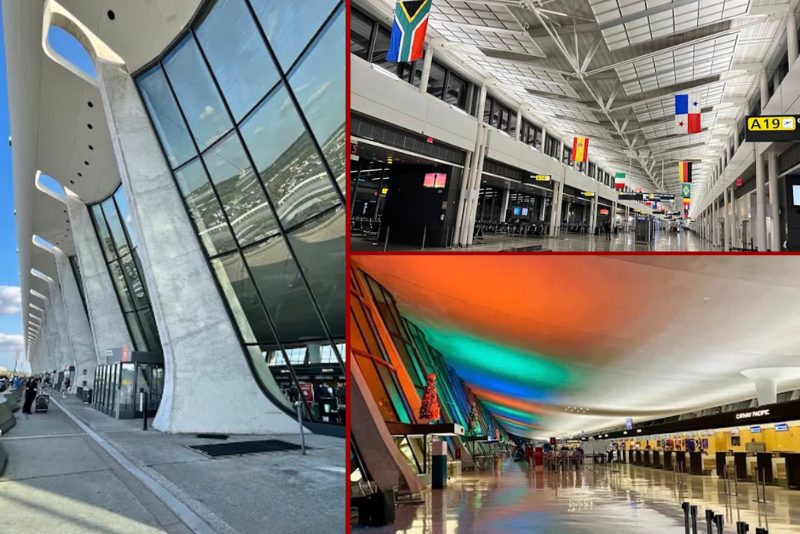
While Trump has criticized Dulles for being “incorrectly designed,” the plan carefully preserves the iconic main terminal — designed by renowned Finnish-American architect Eero Saarinen — whose work the president has consistently praised. The 1962 terminal building, with its dramatic swooping roofline, is widely considered a masterpiece of mid-century modern architecture and has been recognized as a historic landmark. Saarinen, who also designed the Gateway Arch in St. Louis and the TWA Flight Center at JFK Airport, created the Dulles terminal as a symbol of the jet age’s promise and ambition.
President Trump: “It’s considered one of the worst airports anywhere in the world… We’re going to make it maybe the best with some hard work, and some good thought process.”
For more updates, watch OAN on OAN Live or click the link in our bio. pic.twitter.com/Vd6T9T1E3M
— One America News (@OANN) July 29, 2026
The renovation will phase out Dulles’s long-standing mobile lounge “people movers” — replacing the dated shuttle vehicles with an efficient horseshoe train system to transport passengers between the main terminal and concourses. The mobile lounges, while innovative when first introduced in the 1960s, have become a source of passenger complaints due to their slow speed and limited capacity during peak travel periods. The proposed train system would bring Dulles in line with modern airport infrastructure standards seen at major international hubs worldwide.
Here’s the kicker: the multi-billion-dollar project will receive zero federal funding.
Instead, Transportation Secretary Sean Duffy says financing will come through airline partnerships — carriers that want to operate out of the upgraded facility will contribute directly to funding the modernization. This approach represents a significant departure from traditional airport infrastructure projects, which typically rely on a combination of federal grants, passenger facility charges, and bond financing backed by airport revenue.
“United [Airlines] is going to partake in part of the payment, but the airlines who participate in the project are going to pay for it.”
The airline-funded model may shift costs directly to carriers that have long advocated for improvements at Dulles, where passenger amenities and operational efficiency have lagged behind competing East Coast hubs. Industry analysts will be watching closely to see whether this financing structure becomes a template for future major airport projects nationwide, particularly as federal infrastructure budgets face increasing constraints.
Trump told reporters the project is mostly funded but will likely still require congressional approval. He emphasized the initiative has drawn bipartisan support — signaling strong political backing across both parties to expedite the capital region’s key international hub. The bipartisan nature of the support is notable given the airport’s critical role serving members of Congress, federal employees, diplomats, and international delegations conducting business in Washington.
“It’s considered one of the worst airports anywhere in the world… We’re going to make it maybe the best with some hard work, and some good thought process. This transformation is another step in our ongoing efforts to make Washington, D.C., safe and beautiful again, the safety aspects, both in terms of the airlines and in terms of crime.”
Washington Dulles International Airport serves as the main gateway for the nation’s capital, located 26 miles west of downtown Washington in Loudoun and Fairfax counties. The airport handled tens of millions of passengers annually before recent years, making it one of the busiest airports in the United States and a critical economic engine for the greater Washington metropolitan area.
The president expressed confidence the sweeping renovations will move forward rapidly despite potential legislative hurdles. The aggressive timeline reflects the administration’s broader infrastructure priorities and Trump’s longstanding personal interest in large-scale construction and development projects.