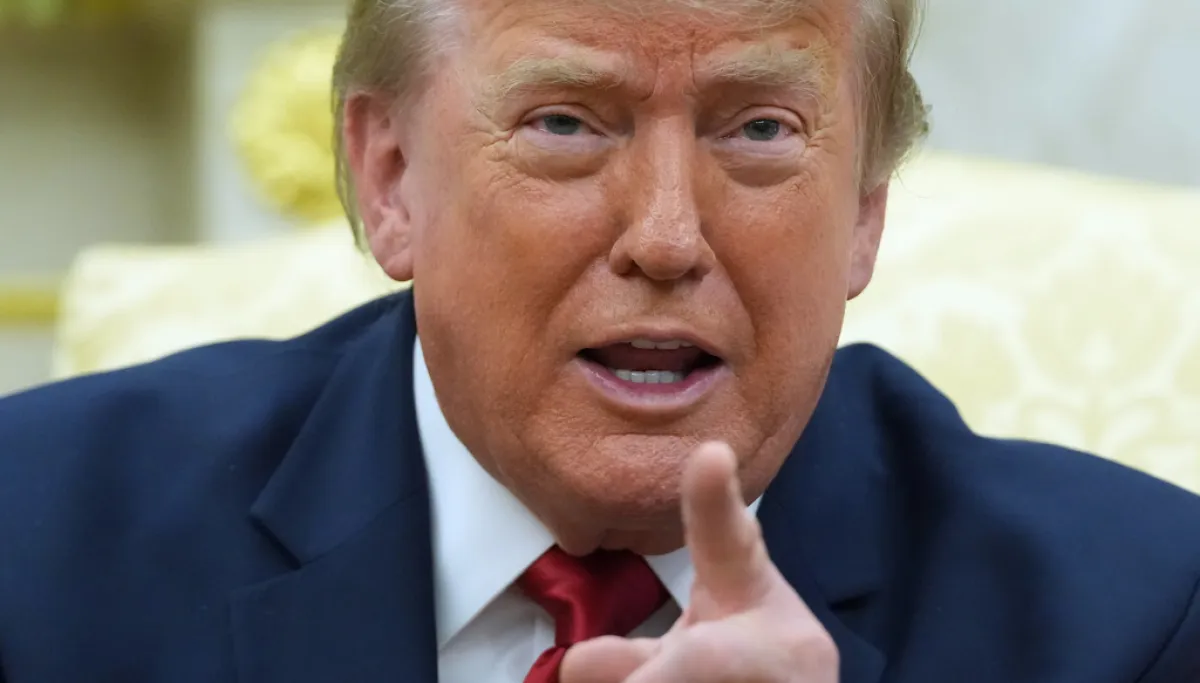
President Donald Trump will use a primetime address Thursday at 9 p.m. to make the case for new election integrity measures — an issue that has defined his political movement since 2020.
Trump told reporters in the Oval Office this week that the announcement would concern elections and would be “really, really big news.”
“It doesn’t get bigger because without free and fair elections, you don’t have a country.”
An administration official familiar with the preparations told the Washington Examiner internal discussions had centered on election security and possible voting-machine vulnerabilities that could be susceptible to foreign cyber intrusions.
The official expected acting Director of National Intelligence Bill Pulte to provide intelligence material. Homeland Security Secretary Markwayne Mullin and FBI Director Kash Patel are also expected to participate, though the official cautioned that assessment was based partly on informed speculation, not a full briefing.
Notably, the source downplayed social media claims that the results of the 2020 election in Georgia would be declared “illegitimate.”
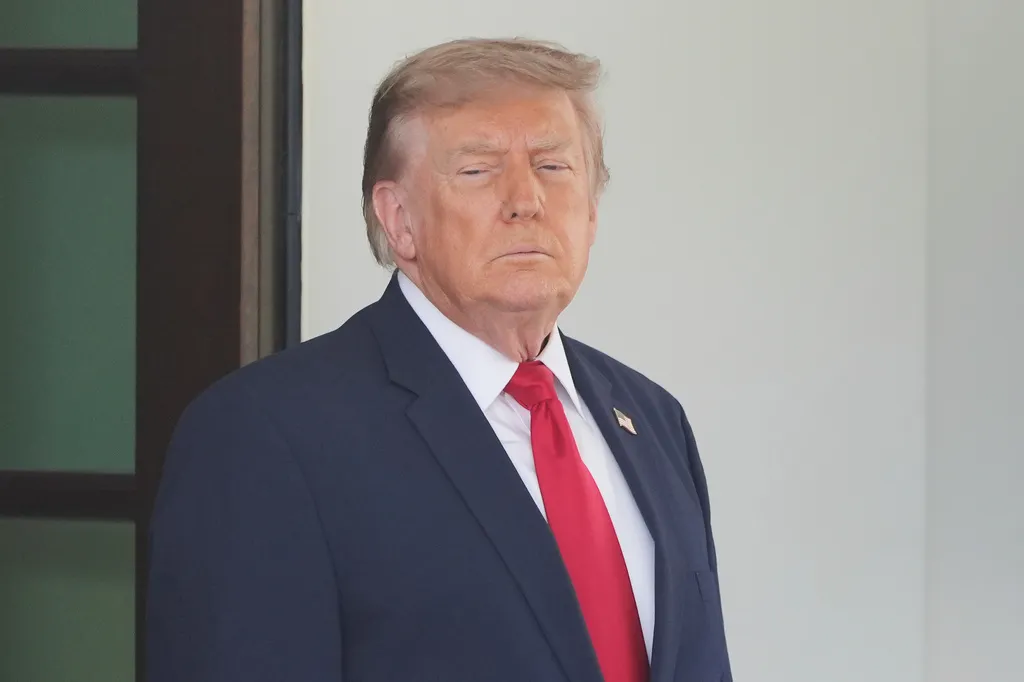
A second source close to the FBI said bureau personnel as of Tuesday had not been read into a new election-interference finding. The source said the speech had originally been expected Tuesday, July 14, before being moved to Thursday.
Some officials learned of the change through Trump’s Monday afternoon Truth Social post announcing the speech.
Both sources said the speech could also increase pressure on the Senate to pass the SAVE America Act — the Republican-backed bill requiring documentary proof of citizenship to register to vote in federal elections.
White House press secretary Karoline Leavitt cautioned against advance reporting on the substance of the speech.
“As usual, anonymous sources are speculating about what President Trump will say during his speech on Thursday evening,” Leavitt said. “The truth is, nobody knows yet what President Trump will ultimately say, which is why everyone should tune in.”
If Trump releases evidence that foreign actors altered votes or penetrated voting machines in 2020 in ways big enough to alter the outcome, it would mark a major break from the government’s public findings.
On March 16, 2021, under the Biden administration, the Office of the Director of National Intelligence released an assessment finding no indication that a foreign actor attempted to alter voter registration, ballot casting, vote tabulation, or the reporting of results.
A companion report released that month by the Biden administration’s Justice and Homeland Security departments found no evidence that a foreign government prevented voting, changed votes, or compromised election infrastructure to manipulate the outcome.
However, those reports indicated Russia, Iran, and China each posed different election-related threats. Russian operatives used intelligence-linked intermediaries and fabricated social-media identities to promote allegations about Biden and amplify claims of election fraud. Russian hackers also compromised some state and local government networks and extracted voter information.
From August through November 2020, during Trump’s first administration, Iranian operatives probed state election websites, stole voter information, and sent threatening emails to Democrats while posing as the Proud Boys.
Prior intelligence reports surrounding China’s planned intervention in the 2020 election remain one of the most politically explosive parts of the record. The Biden administration’s March 2021 intelligence assessment said Beijing considered but did not deploy an operation intended to change the presidential outcome.
But a dissenting intelligence official concluded China took at least some steps during the summer of 2020 to undermine Trump’s reelection prospects through public statements and media messaging.
Separate FBI records released in 2025, during Trump’s second administration, showed the bureau briefly circulated raw intelligence alleging a more direct Chinese operation involving fake U.S. driver’s licenses and mail ballots.
The report, submitted by the FBI’s field office in Albany, New York, claimed the Chinese Communist Party had sent fake licenses to sympathizers in the United States who would vote for Biden. The FBI circulated the report Sept. 25, 2020 — one day after then-FBI Director Christopher Wray testified that the bureau had not seen “any kind of coordinated national voter fraud effort.”
FBI headquarters recalled the report the same day it was circulated and instructed personnel to delete it from bureau systems.
According to records obtained by Senate Judiciary Committee Chairman Chuck Grassley, Assistant FBI Director Marshall Yates wrote in a June 27, 2025, letter that one reason cited internally was that “the reporting will contradict Director Wray’s testimony.”
The documents do not prove the alleged ballot scheme occurred. However, FBI personnel described the underlying information as uncorroborated and weighed whether the claim could itself be Chinese disinformation.
The records also showed Customs and Border Protection had seized nearly 20,000 fake U.S. driver’s licenses — most from China and Hong Kong — at Chicago O’Hare in the first half of 2020. The FBI documents did not directly connect those seizures to the alleged voting scheme, but investigators described them as “logical investigative leads” that were not pursued.
Voting-machine vulnerabilities have also drawn scrutiny. On June 3, 2022, under the Biden administration, the Cybersecurity and Infrastructure Security Agency disclosed vulnerabilities in certain Dominion ImageCast X ballot-marking devices but said it had “no evidence” they were exploited in an election.
After Trump returned to office, then-Director of National Intelligence Tulsi Gabbard’s office obtained voting machines and data from Puerto Rico in May 2025 for forensic testing. Her office said it found concerning cybersecurity and operational practices but released few supporting details.
The Republican-controlled House passed the SAVE Act on Feb. 11, 2026, but the measure has stalled in the Senate, where it lacks the 60 votes needed to overcome a filibuster.
Trump’s March 2025 executive order sought to require proof of citizenship for voter registration and bar counting mail ballots that arrive after election night. Federal courts have blocked major parts of the order, ruling the president cannot unilaterally rewrite election law.
That timing is one reason some officials said they expected Thursday’s address to combine declassified intelligence with a renewed push for voting legislation.
Whether Trump releases evidence beyond previously disclosed influence operations will not be clear until he speaks Thursday night.
UPDATE: The White House tells us President Trump’s speech will not focus on Georgia’s 2020 elections.
Georgia Republican source adds to us that they were notified of speech and the upcoming report’s initial Georgia election
focus in advance.Speech set for Thursday at 9pm. https://t.co/ejjmtpqkHs
— Washington Reporter (@DC_Reporter) July 14, 2026