
Nine House Republicans have co-signed a resolution to repeal the 17th Amendment — the 1913 constitutional change that gave voters the power to directly elect U.S. senators.
If the resolution passes, state legislatures would once again choose senators.
Republican Texas Rep. Keith Self introduced the joint resolution, arguing that the Senate was designed to represent states as sovereign entities — not national political ambitions.
“The current system has given us six-year politicians more focused on national ambitions and the institution of the U.S. Senate than on the states they serve.”
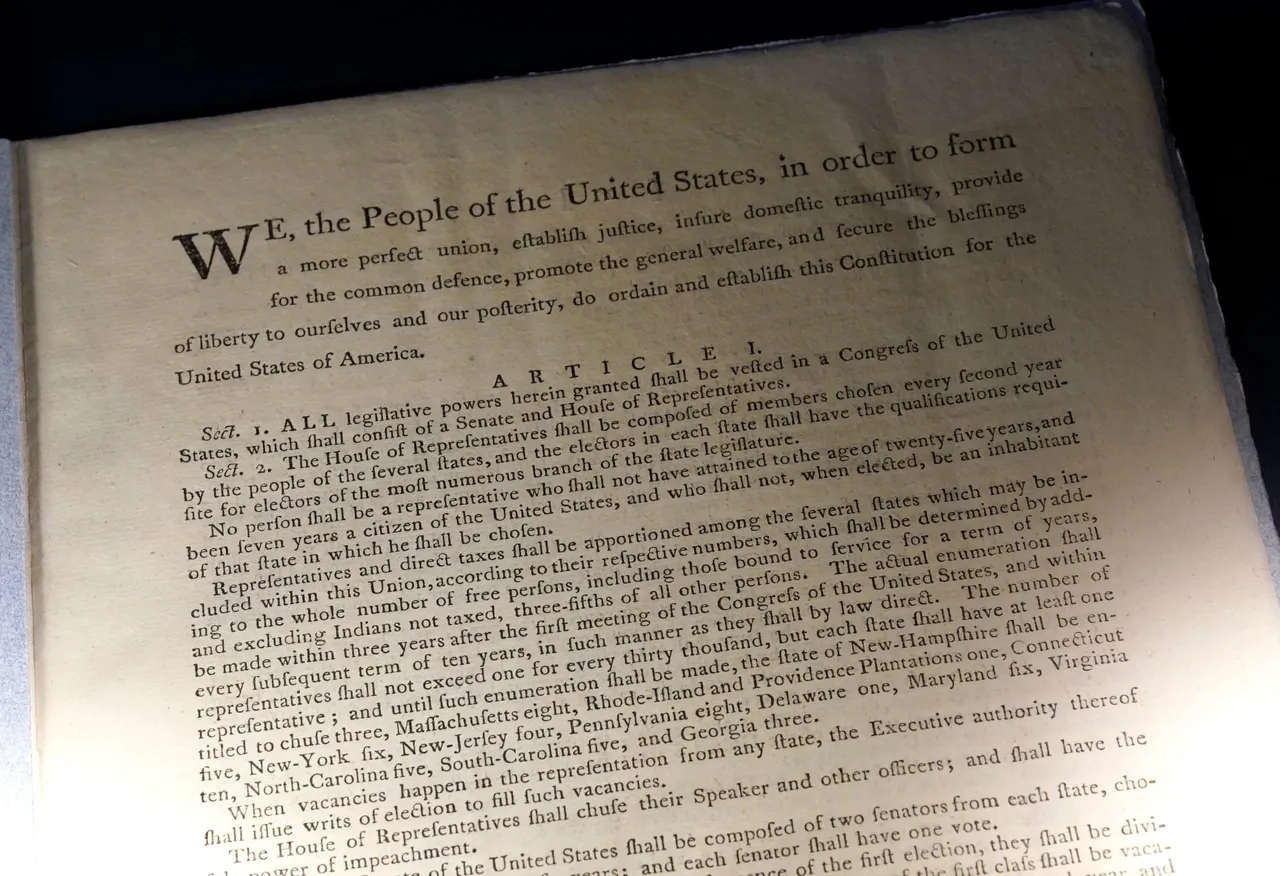
The Constitution originally called for senators to be “chosen by the Legislature thereof” under Article I Section III. The 17th Amendment, ratified in 1913, changed that to “elected by the people thereof.”
Self’s press release argues that repealing the amendment would give senators incentive to defend state interests rather than chase federal power.
The resolution’s cosponsors include Republican Reps. Eric Burlison of Missouri, Andrew Clyde of Georgia, Paul Gosar of Arizona, Andy Harris of Maryland, Scott Perry of Pennsylvania, Clay Higgins of Louisiana, Sheri Biggs of South Carolina, Michael Cloud of Texas and Victoria Spartz of Indiana.

“Our Founding Fathers designed the Senate to protect state sovereignty and act as a check on federal overreach,” Self said. “If senators are supposed to represent their states, then the states should choose them.”
Burlison told the Daily Caller News Foundation that the 17th Amendment helped fuel federal power growth over the last century.
“As originally envisioned by our Framers, the Senate was a key bulwark of federalism: It was meant to give the states a check on the federal government and moderate the passions of the people. Therefore, it’s no coincidence that over the last century, Washington has concentrated more power in itself and buried the country in debt.”
Higgins called the 17th Amendment “arguably the most injurious amendment in history,” arguing that “big money has twisted our Senate races into circus acts.”
A spokesperson for Spartz told the DCNF that until the amendment is repealed, “states can begin moving primaries to their state legislatures, party conventions, or a combination of both.”
The U.S. adopted the 17th Amendment after states faced repeated deadlocks when state Senates and Houses were controlled by different parties — leaving vacancies in the U.S. Senate. Delaware went almost two years without one Senate seat in the 1890s due to a stalemate.
Some states also faced “political machines” controlling state legislatures, with senators elected under machine support considered their “puppets,” according to the National Archives. Critics at the time viewed the Senate as a “millionaire’s club” serving “powerful private interests.”
By 1912 — one year before ratification — 29 states were already using their own version of direct Senate elections. The “Oregon Plan” required state legislature candidates to pledge support for the Senate candidate who won the state’s popular vote.
Congress passed the resolution for the 17th Amendment after at least 287 proposals for direct election of Senators had been introduced, according to the U.S. Senate website. The Senate passed the amendment in a close vote in 1911. The House followed over a year later, and three-fourths of states ratified it in 1913.
Self’s resolution revolves around returning to the Founding Fathers’ “original vision for the United States Senate,” according to the press release. The 17th Amendment upsets the proper balance of Congress — with the House representing the people and the Senate representing the states.
Federalist Paper 62, penned by James Madison or Alexander Hamilton in 1788, argued that state legislatures electing senators offered a way of “giving to the State governments such an agency in the formation of the federal government” and forming “a convenient link” between state and federal systems.
Federalist Paper 64, written by John Jay, argued that confining Senate votes to state legislatures would ensure voters “will in general be composed of the most enlightened and respectable citizens” who would choose “those men only who have become the most distinguished by their abilities and virtue.”
The only amendment successfully repealed in U.S. history is the 18th Amendment, which mandated Prohibition. The 21st Amendment repealed it just 13 years later.