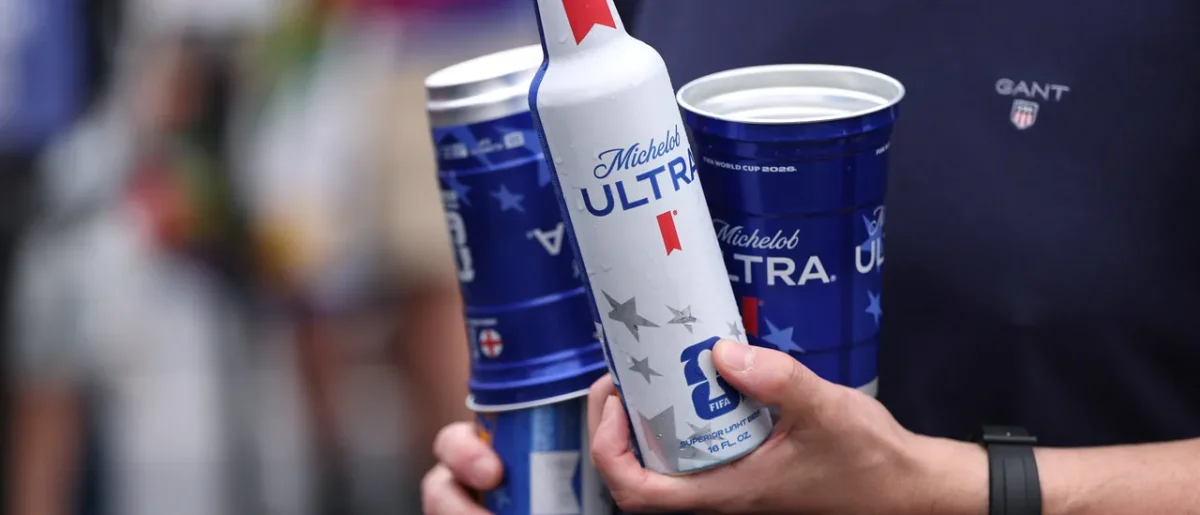
A Belgian-Brazilian conglomerate controls nearly half the American beer market—and a new watchdog report warns that foreign stranglehold is crushing small brewers across the heartland.
The report from Consumer Action for a Strong Economy obtained exclusively by the Daily Caller exposes how Anheuser-Busch InBev—the world’s largest brewer—uses its massive lobbying and advertising machine to dominate the U.S. market while hiding behind “Made in America” marketing campaigns.
InBev bought the iconic American company Anheuser-Busch for $52 billion in 2008. The conglomerate is now headquartered in Belgium, not middle America—despite what their ads claim.
“AB InBev controls nearly half of the domestic beer market. Let that sink in. A foreign company controls half the US beer market.”
The watchdog group points to InBev’s sophisticated lobbying operation and the company’s rebranding efforts after the Bud Light boycott triggered by transgender influencer Dylan Mulvaney.
According to the report, InBev’s “Choose Beer Grown Here” and “Made of America” campaigns launched in the aftermath of the Mulvaney debacle have largely obscured the fact that the company’s corporate headquarters are in Leuven, Belgium.
The report also highlights InBev’s 2013 settlement with the Department of Justice over its purchase of Mexican beer manufacturer Grupo Modelo. The DOJ allowed the $20 billion deal to proceed but required InBev to sell U.S. rights for Modelo beer to Constellation Brands to prevent a monopoly.
That settlement helped the craft beer industry explode from 4,803 domestic small brewers in 2015 to 9,578 in 2025—but the watchdog says it never addressed structural concerns over product distribution.
InBev allegedly incentivizes major distributors to prioritize its products, leaving independent brewers struggling to find reliable distribution channels. Small brewers are also disadvantaged in states where self-distribution is illegal.
“While the DOJ agreement was good for craft brewers in the sense that a more concentrated market would have been worse for them, it wasn’t designed to help them directly, and the pervasive distribution problems that matter most to small brewers were left mostly unchanged.”
The report warns that InBev is lobbying U.S. states to repeal sales taxes on its products—and will likely push for the same at the federal level as President Trump renegotiates the United States-Mexico-Canada Agreement.
A gigantic tax break for “American beer” would deliver nearly half its benefit to the foreign conglomerate. When Canadian trade tensions flared after Trump’s tariff announcements, InBev ran a “Made in Canada” ad campaign celebrating its Canadian workers and Canadian barley.
The watchdog calls on U.S. policymakers to address InBev’s unfair distribution practices, push back against further tax breaks, and prevent the company from achieving monopoly power.
InBev has drawn scrutiny from Congress and the Treasury Department over its dominance. During a 2015 Senate hearing on the company’s $107 billion merger with SABMiller, Democratic Connecticut Sen. Richard Blumenthal said the trend towards massive beer behemoths has not been “a happy one for many consumers.”
After the 2008 merger between Anheuser-Busch and InBev, thousands of workers were laid off in St. Louis, Missouri, where the brewery was originally founded in 1852. The merger led to cost-cutting that decimated local ad agencies when InBev moved the marketing department to New York City.
The report concludes that as Americans prepare to celebrate the nation’s 250th anniversary, the last thing policymakers should be doing is rewarding a foreign conglomerate that doesn’t play by the rules with a giant tax break.