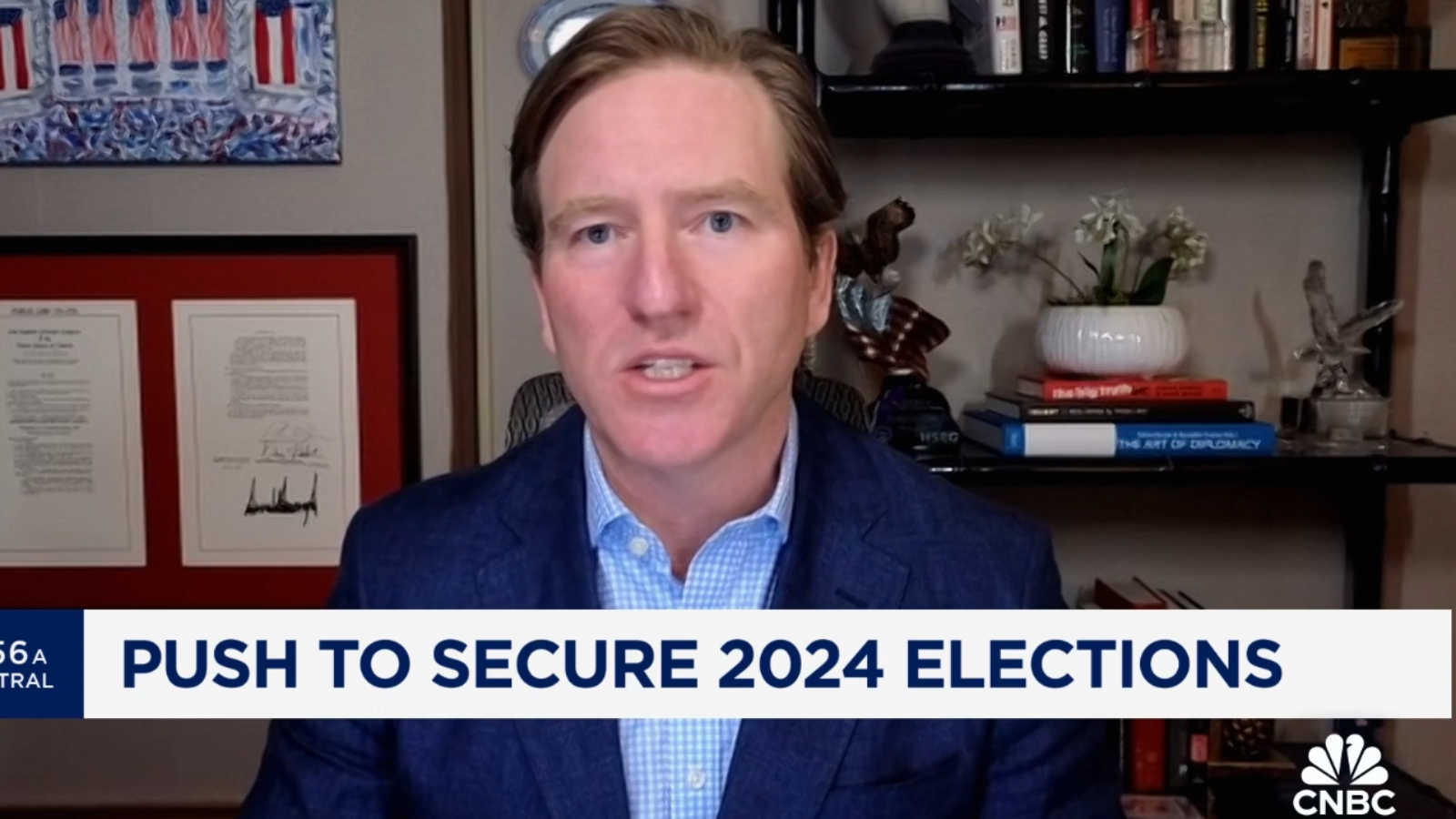

Today marks a pivotal moment as President Donald Trump has taken decisive action against Chris Krebs, former Director of the Cybersecurity and Infrastructure Security Agency (CISA). By signing a Presidential Memorandum, President Trump has commanded the Department of Justice and other government entities to launch a thorough investigation into Krebs’ activities related to the contentious 2020 election.
According to White House staff secretary Will Scharf, the memorandum highlights Krebs’ misuse of his position:
“This is a man who weaponized his position against free speech in the election context and the context of COVID-19. This is a similar Presidential Memorandum to the one you just signed. It addresses his access to government existent clearances he might have and further instructs your Department of Justice, other aspects of your government, to investigate some of the malign acts he participated in while he was still head of CISA.”
President Trump didn’t mince words, describing the 2020 election as “very corrupt” and accusing officials of using COVID-19 as a pretext to rig the election. He singled out Krebs for his controversial statement that the 2020 election was “the most secure in U.S. history,” labeling him a “wise-guy.” Notably, Michigan Governor Gretchen Whitmer was reportedly present in the Oval Office during the signing.
Chris Krebs… this is a man who weaponized his position against free speech in the election context… this instructs your department of justice.. to investigate..
— Acyn (@Acyn)
March 1, 2025
The criticism of Krebs stems from his endorsement of a statement released on November 12, 2020, by election security representatives, calling that year’s election the most secure in U.S. history. But this bold claim came into question when a CISA report titled “Election Infrastructure Subsector Cyber Risk Summary” surfaced, revealing significant vulnerabilities.
Secret CISA Vulnerabilities Report Prior to the 2020 Election
Yehuda Miller discovered this report, released in February 2024, which details numerous cybersecurity weaknesses in election infrastructure entities:
- 76% of entities had spearphishing vulnerabilities.
- 48% had at least one internet-accessible host with critical vulnerabilities.
- 39% operated risky services on internet-accessible hosts.
- 34% relied on unsupported operating systems.
This report, marked TLP:Amber for limited disclosure, calls into question the integrity of Krebs’ assertion about election security. Moreover, a recently uncovered meeting involving CISA, Dominion, ES&S, ERIC, the FBI, and various state officials on Election Day 2020 raises further suspicion about the transparency of the electoral process.
Mass Censorship
Reports have detailed CISA’s role, under Krebs, in a sweeping censorship campaign in 2020, targeting information related to COVID-19 and the election. The Election Integrity Partnership, consisting of entities like the Stanford Internet Observatory, coordinated efforts to suppress what they deemed “misinformation” and “disinformation.”
SolarWinds Hack
Adding fuel to the fire, December 2020 saw a significant hack involving SolarWinds, a firm used by the federal government, including Dominion Voting Systems. In a twist of fate, Krebs later co-founded a cybersecurity firm with Alex Stamos, previously of Facebook, and their first client was SolarWinds. This connection cannot be ignored.
The Cybersecurity and Infrastructure Security Agency came into being in 2018, with Chris Krebs becoming its first acting Director. His background in environmental sciences and law now faces scrutiny under the shadow of these unfolding events.